

The average social media user's focused attention on a single post has dropped from 12 seconds in 2015 to just 8.25 seconds in 2025, according to SQ Magazine's analysis of social media behavior. And that already-thin window is shrinking. Meanwhile, the volume of content competing for that attention keeps climbing — users are now exposed to over 5,000 pieces of content daily, up from 1,400 in 2012.
This poses a challenge to advertisers. If your ad doesn't communicate value almost instantly, it gets scrolled past. Your targeting can be perfect, your copy can be sharp, and your offer can be genuinely compelling — but if the visual doesn't arrest the eye within the first two seconds, none of it matters.
That's where ad design earns its place in performance marketing, not just brand marketing. The visual quality of an ad determines whether anyone slows down long enough to read, click, or convert. And as campaign costs continue to rise, making every impression count is a business-critical concern.
What Is Graphic Design in Advertising?
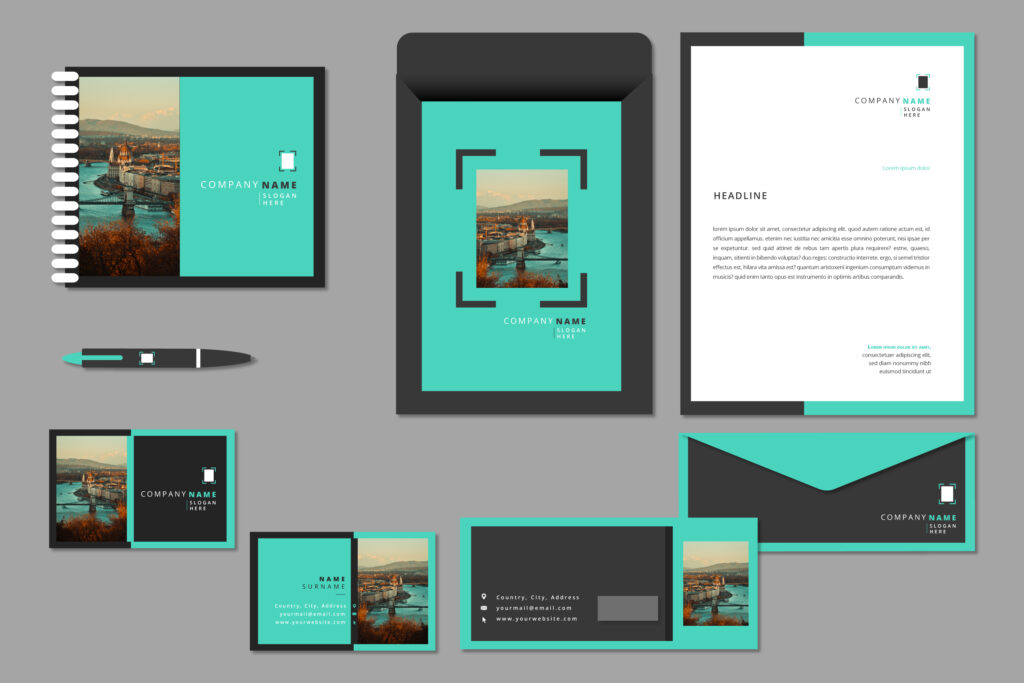
Ad graphic design is the deliberate use of visual elements (layout, color, typography, imagery, hierarchy, and whitespace). to communicate a message and guide the viewer toward a specific action. It's not decoration; it’s structure.
There are several types of graphic design that come into play across an advertising campaign. These include, but are not limited to, display banners, paid social creatives, video ad graphics, email visuals, and landing page assets. Each format has its own visual conventions and performance dynamics, but they all operate on the same core principle — design either earns the viewer's attention or loses it.
Ad design services several interconnected roles:
1. It Captures Attention
Visual contrast and composition are your first line of engagement in a feed environment. Before your copy does anything, your design has already won or lost the scroll.
2. It Communicates Brand Identity
Consistent use of colors, fonts, and visual style signals professionalism and builds brand familiarity over time. Audiences are more likely to trust and engage with ads from brands they recognize visually.
3. It Directs the Viewer’s Eye
Good design isn't random. The hierarchy of visual elements tells the viewer what to look at first, second, and third. That path should naturally lead to your call to action.
4. It Reinforces the Message
The visual and the copy should work together to communicate a single, clear idea. When they pull in opposite directions, the ad loses coherence, and performance suffers.
5. It Builds Emotional Resonance
Color psychology, imagery, and visual tone all trigger emotional responses. Ads that connect emotionally perform better on every metric because they make viewers feel something before they’ve processed the offer rationally.
6. It Signals Quality
A polished, well-crafted ad communicates that the brand behind it is credible and trustworthy. A rushed or generic-looking creative does the opposite; it triggers skepticism before your message even lands.
How Graphic Design Impacts Ad Metrics
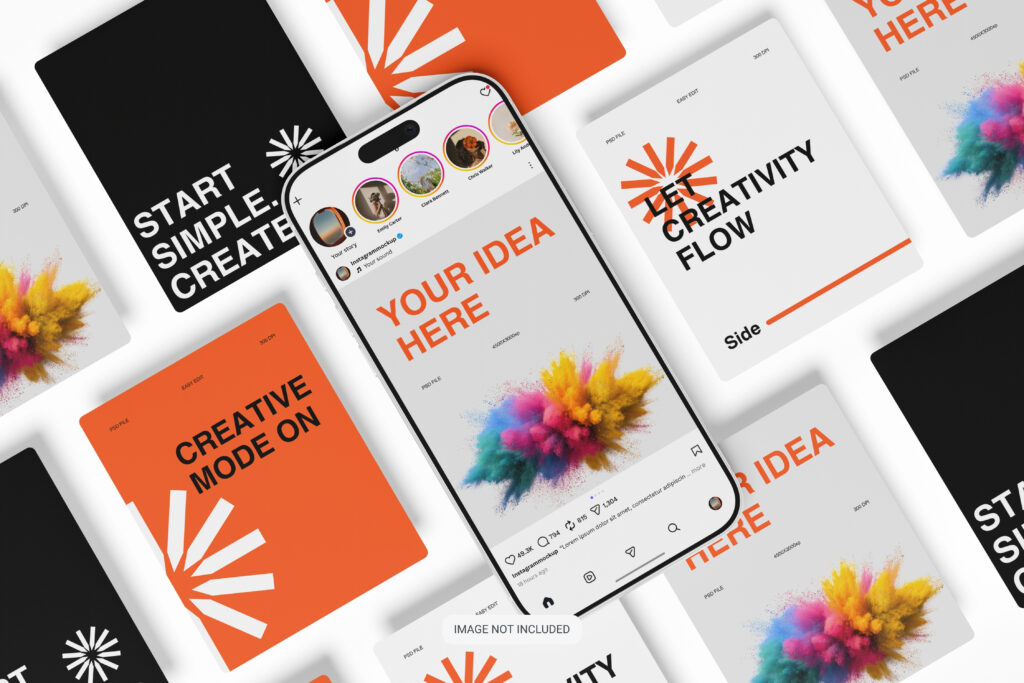
Ad design isn’t just about aesthetics. It directly influences the numbers on your campaign dashboard. If you're thinking about how to get better performance from ad campaigns, creative quality is the best place to start. Here's how it maps to specific performance metrics.
- Click-Through Rate (CTR)
CTR is one of the clearest indicators of whether your creative is working. It measures how many people found your ad compelling enough to take action, and ad design is one of the biggest levers you can pull.
Dynamic, personalized ad creatives from professional designers achieve a 200% higher click-through rate. The key is creative quality and relevance. When your visual hierarchy is clear, and your imagery is on-brand, more people take the next step.
This holds true across platforms. Facebook ad design, for instance, operates in one of the most competitive feed environments in digital advertising. On a platform where users scroll past hundreds of posts daily, the quality of your visual determines whether your paid placement is treated as content or ignored as noise.
- Conversion Rate
Getting clicks is one thing, but converting is another.
Landing pages with embedded video content convert at up to 86% higher rates than text-only equivalents. Personalized CTAs — which are a design decision as much as a copy decision — convert 202% better than generic ones.
The design of the post-click experience has to match the promise of the ad itself. When the visual language is consistent from the ad through to the landing page, audiences feel less friction and trust the path they're on.
Visual-first landing pages have also been shown to reduce bounce rate, meaning fewer users abandon the page before converting. That directly affects your cost per acquisition.
- Ad Recall and Brand Recognition
Recall is the metric that determines whether your ad spend compounds over time or disappears the moment a campaign ends. Ads that leave a visual impression build familiarity that pays off in future campaigns.
Custom visuals increase brand recall by up to 89% compared to generic imagery, according to a 2026 visual content marketing analysis. Consistent design elements (colors, typography, logo placement, and visual style) are what make audiences recognize your band across placements and time frames.
In practical terms, this means a brand with strong visual consistency across its ad creatives builds cumulative equity with every impression, even for ads that don't generate a click.
- Engagement Rate
Engagement (shares, comments, saves, and views) is a downstream effect of design quality that also feeds back into platform algorithms and organic reach. The trend is consistent: original, intentional design outperforms templated or generic creative across engagement formats. When your visual content is distinctive and resonates with your audience, it generates secondary signals that extend your reach beyond paid placements.
- Customer Acquisition Cost (CAC)
CAC is ultimately where all your marketing efforts come together. When your ads generate a higher CTR, you attract more visitors without increasing ad spend. When your landing pages and offers convert better, more of those visitors become customers.
Strong brand recall also lowers acquisition costs over time because familiar audiences are easier and less expensive to convert than people encountering your brand for the first time.
This is especially evident in retargeting campaigns. Studies show that retargeted audiences can convert 150% to 200% more effectively than cold audiences. However, those results don't happen by accident. They depend on the quality of the earlier brand interactions, particularly the ad creatives that introduced your brand in the first place.
Effective design leaves a lasting impression, making prospects more receptive when they see your message again. Poor creative, on the other hand, weakens the entire funnel, reducing the impact of retargeting efforts and driving up acquisition costs at every stage.
It's also worth thinking about this in the context of the cost of graphic design services. Businesses that treat design as an afterthought often underinvest in creatives and then overspend on media to compensate for poor performance. The more accurate framing is to treat design investment as a direct input to CAC.
Invest in Graphic Design That Drives Results

The data makes a clear case: ad graphic design isn't a soft, subjective input into your advertising. It's one of the most measurable performance variables in your entire campaign. CTR, conversion rate, ad recall, engagement, and customer acquisition cost are all materially influenced by the quality and consistency of your creatives.
Understanding how to improve performance from ad campaigns almost always comes back to the same answer: fix the graphic design first.
For marketing teams running multiple campaigns across paid social, display, email, and digital, the challenge lies in keeping up with the creative volume these channels demand. Webmastered is here to help you create graphics that directly impact ad metrics. When you hire experienced graphic designers through us, you get a structured creative team built for performance and scale.
If your ad performance has plateaued and you suspect the creative is part of the problem, or if you're scaling campaigns and need a design partner who can keep pace, contact us today.