

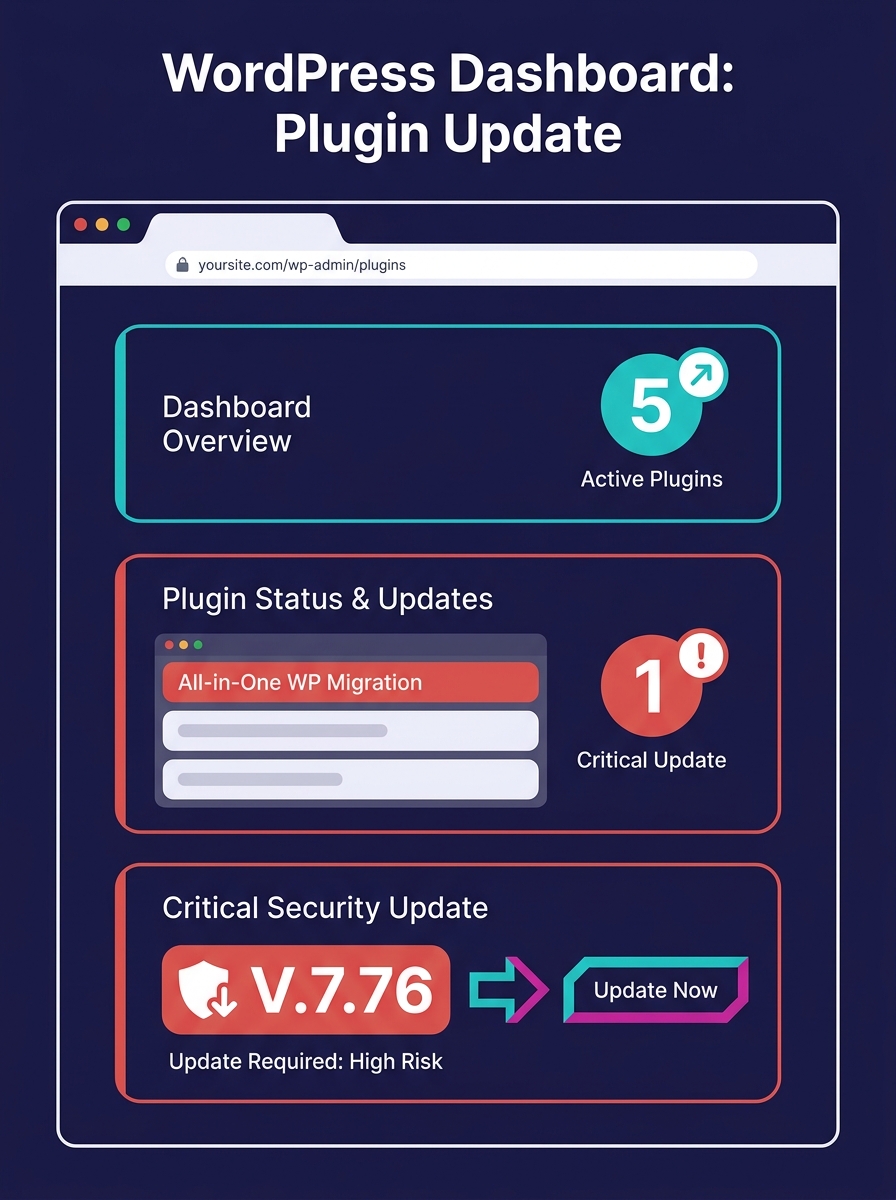
A critical security vulnerability designated CVE-2026-19949 was disclosed September 4 in the All-in-One WP Migration plugin, exposing millions of WordPress installations to potential exploitation, according to eSecurity Planet. The plugin, widely used for site migration and backup operations, has no confirmed patched version publicly available as of September 5.
TL;DR: CVE-2026-19949 affects the All-in-One WP Migration plugin across millions of WordPress sites, requiring immediate agency action to audit client installations and coordinate emergency updates.
The vulnerability disclosure arrives three days after WordPress launched its Core Security Initiative to accelerate vulnerability detection, underscoring the escalating threat environment agencies face when managing client WordPress portfolios. All-in-One WP Migration ranks among the most installed migration tools in the WordPress ecosystem, with documented usage exceeding 5 million active installations according to WordPress.org repository data.
Vulnerability Scope and Installation Base
All-in-One WP Migration serves as a primary site migration and backup solution for agencies handling WordPress site transfers, client onboarding, and staging environment workflows. The plugin's widespread adoption across agency client portfolios boosts the remediation burden, according to the eSecurity Planet report. Sites running vulnerable versions face exposure until patches deploy and updates propagate across managed installations.
The disclosure follows a pattern of plugin vulnerabilities requiring emergency response from agencies managing distributed WordPress installations. Security researchers have documented that WordPress plugin exploits now launch within hours of public vulnerability disclosure, compressing the window agencies have to audit, patch, and document remediation across client accounts.
Technical Impact on Migration Workflows
All-in-One WP Migration handles sensitive operations including database exports, file transfers, and configuration backups during site migration processes. A vulnerability in this plugin potentially exposes client data, site credentials, and database contents during export and transfer operations. Agencies using the plugin for white-label site launches or staging environment management face immediate operational risk.
The plugin's role in agency workflows creates compounding exposure: a single vulnerable installation on a staging server used for multiple client projects could compromise data from numerous accounts. Agencies operating centralized migration infrastructure must audit not only client production sites but also internal development and staging environments.
Immediate Remediation Requirements
Agency operations teams must inventory all installations of All-in-One WP Migration across client accounts, staging servers, and development environments as of September 5. The audit process requires cross-referencing plugin version numbers against CVE-2026-19949 disclosure details to identify vulnerable installations requiring immediate attention.
Sites identified with vulnerable versions require emergency update deployment once a patched release becomes available. Until patched versions ship, agencies should evaluate whether to temporarily disable the plugin on client sites where migration operations are not actively scheduled. The risk calculation depends on whether sites face public exposure or operate behind authentication barriers.
Documentation protocols require agencies to log remediation actions per client account, including vulnerability identification date, version numbers discovered, patch deployment timestamps, and verification testing results. This documentation protects agencies in client security audit scenarios and provides evidence of proactive security management.
What This Means for Agency Owners
Agency owners managing WordPress client portfolios must activate emergency audit protocols immediately to identify All-in-One WP Migration installations across all accounts under management. The plugin's role in site migration workflows means exposure extends beyond individual client sites to include staging servers and development environments used for multiple projects simultaneously.
Operations leads should implement a three-tier response: urgent audit completion by end of day September 5 to identify vulnerable installations, immediate deployment of patches once available, and client notification documentation showing proactive security management. Agencies lacking centralized plugin inventory systems face manual site-by-site audits, highlighting the operational value of management platforms that track plugin versions across client portfolios.
The CVE-2026-19949 disclosure reinforces the security overhead embedded in WordPress agency operations. Agencies should evaluate whether migration and backup operations warrant consolidation to managed services with dedicated security teams or whether maintaining plugin-based workflows justifies the recurring audit and remediation burden that disclosures like this one impose on stretched operations capacity.