

Automated bots scan millions of WordPress installations daily for weak passwords and outdated plugins, making basic security hygiene the primary defense against mass compromise attempts, according to a security analysis published Thursday by WorldPressIt. The report documents how attackers exploit the platform's 43-percent market share by running automated scans for known vulnerabilities rather than targeting individual sites.
The analysis identifies weak user credentials and abandoned plugins as the two most exploited entry vectors. Most WordPress compromises stem from brute-force login attempts testing common username-password combinations across thousands of sites simultaneously, the report states. Attackers rarely employ sophisticated encryption cracking; instead, they authenticate as legitimate users after discovering reused passwords exposed in unrelated data breaches.
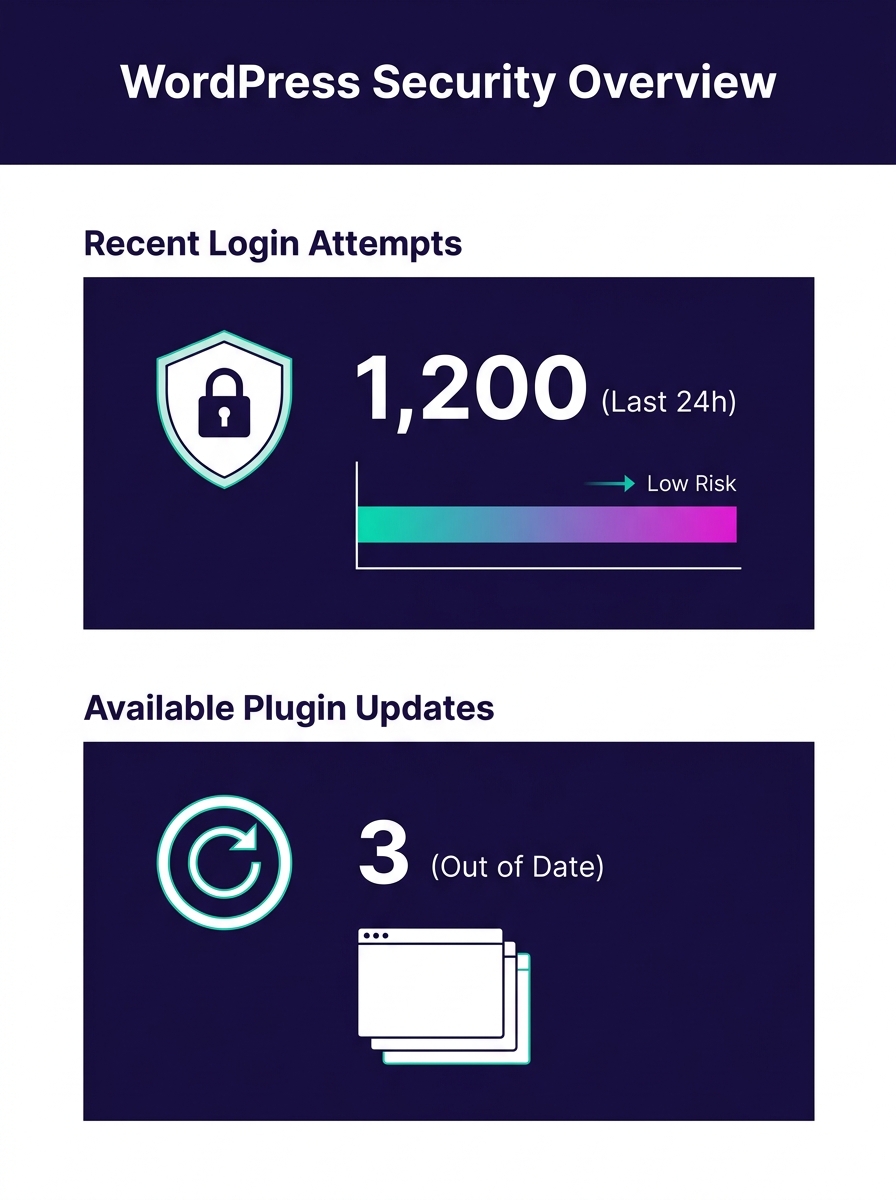
Plugin Ecosystem Creates Persistent Attack Surface
The WordPress plugin repository hosts tens of thousands of extensions, with many receiving irregular security updates after initial development, according to the analysis. Attackers routinely monitor vulnerability disclosures for popular plugins, then execute mass scans to identify sites running outdated versions before administrators apply patches.
The report cites a common scenario: a restaurant owner grants administrative access to a freelance developer for menu updates, then neglects to revoke the account after project completion. When that contractor's password appears in a leaked database months later, automated systems immediately test those credentials against the restaurant's login page.
This pattern mirrors broader trends documented in previous WordPress security incidents, where plugin vulnerabilities account for the overwhelming majority of site compromises across the platform's install base.
User Role Mismanagement Amplifies Breach Impact
Sites commonly assign administrator privileges to users requiring only editor or author permissions, the analysis found. This practice transforms content-level account compromises into full site takeovers, allowing attackers to install malicious plugins and create persistent backdoor accounts.
The report recommends agencies implement standardized user provisioning workflows: create role-specific accounts tied to individual email addresses, enforce password complexity requirements through security plugins, and schedule regular access reviews after project milestones. For agencies managing multiple client sites through white-label development services, these controls reduce the blast radius when a single contractor's credentials are exposed.
Two-factor authentication emerged as a critical second layer, preventing access even when passwords are compromised. The analysis notes that security plugins like Wordfence and Sucuri can automate login attempt blocking and generate alerts for suspicious access patterns, such as authentication from unfamiliar geographic locations.
Update Discipline Remains Primary Prevention Mechanism
The report outlines a staged update protocol: backup files and database before modifications, audit installed components to remove unused plugins and themes, apply WordPress core updates first, then update plugins and themes while testing functionality between each batch. This systematic approach allows administrators to isolate problematic updates quickly.
Many site operators delay updates due to compatibility concerns, creating extended vulnerability windows. The analysis suggests enabling automatic minor core updates while manually reviewing plugin and theme patches in staging environments before production deployment.
For agencies maintaining client infrastructure at scale, automated compliance and risk controls can enforce update policies across portfolios without manual intervention for every site.
Hosting Configuration Weaknesses Compound Software Risks
Missing HTTPS implementation and absent web application firewalls simplify attacker reconnaissance and exploitation, the report states. Hosting providers vary in default security configurations, with budget shared hosting often lacking baseline protections that dedicated or managed WordPress hosting includes by default.
The analysis emphasizes that security is cumulative rather than binary. No single measure prevents all compromises, but layered controls—strong passwords, limited user permissions, current software versions, and server-level protections—force attackers to invest more resources per target, shifting their focus to easier prospects.
Understanding the WordPress plugin supply chain helps agencies evaluate third-party components before deployment. The report recommends vetting plugin authors' update histories, reviewing code repositories for active maintenance, and monitoring vulnerability databases for disclosed flaws.
Reading Between the Lines
Agency operations teams evaluating white-label partners should audit how those vendors implement security controls across client sites, not just the features they deliver. A partner that leaves default "admin" usernames active or delays plugin updates by weeks creates liability that agencies inherit when clients discover compromises.
The practical implication for scaling agencies: security discipline is a capacity constraint as real as developer headcount. Agencies that hire web developers specifically to manage update cycles, vulnerability monitoring, and access reviews can maintain security posture as client portfolios grow, while those treating security as a reactive ticket-queue item will face escalating incident response costs.
The security fundamentals outlined in the report—password strength, update cadence, role management—are table stakes for agencies positioning themselves as strategic partners rather than commodity vendors. Clients increasingly understand that a compromised site costs more than the monthly retainer, making security infrastructure a differentiator when agencies compete for long-term contracts against lower-priced alternatives that skip these controls.