

WordPress plugin vulnerabilities reached 250+ weekly disclosures in 2026, with 43% exploitable without authentication and 23% remaining unpatched 30 days after disclosure, according to a June 28 analysis by UnfoldCMS citing data from Patchstack, Wordfence, and Sucuri annual security reports. WordPress accounted for 96% of all CMS-related vulnerability disclosures in 2026, with plugin ecosystem failures—not core software flaws—driving the majority of compromises.
TL;DR: WordPress plugin vulnerabilities averaged 36 daily disclosures in 2026, with nearly half requiring no authentication to exploit and a quarter remaining unpatched a month after public disclosure.
The vulnerability volume represents a structural problem in the plugin ecosystem rather than isolated incidents. WordPress core software remains reasonably hardened, but the platform's 60,000+ plugin repository—where any developer can publish extensions that execute with full site privileges—generated 95% of breach entry points in 2026, the UnfoldCMS analysis found. The average production WordPress site runs 30+ plugins, each with database and file system access equivalent to WordPress core itself, creating a compounding attack surface that scales with plugin count.
April 2026 Supply-Chain Attack Compromised 25 Plugins in Single Wave
A coordinated supply-chain attack in April 2026 compromised 25+ plugins on the WordPress.org repository over a 72-hour window, exposing an estimated 800,000 sites to backdoor installation and credential theft. Attackers gained push access through three distinct vectors: purchasing legitimate plugins from their developers, credential-stuffing developer accounts, and exploiting shared CI infrastructure used by multiple plugin teams, according to the UnfoldCMS report.
The malicious actors pushed minor version updates—such as 2.4.1 to 2.4.2—containing obfuscated PHP code that created hidden administrator accounts, transmitted site credentials to command-and-control servers, and installed persistent backdoors. Many sites automatically applied the updates overnight without manual review. Patchstack telemetry detected the first compromise 18 hours after the initial malicious push, and the WordPress security team coordinated removal of all affected plugins within 36 hours, the report states.
The attack succeeded despite users following standard security advice to keep plugins updated. "This wasn't a vulnerability in WordPress core or a single plugin," the UnfoldCMS analysis notes. "It was the trust model itself failing." Sites running legitimate plugins from the official repository were compromised through automatic updates from those same trusted sources—a breach pattern that conventional patch-management protocols cannot prevent.
Vulnerability Statistics Highlight Structural Plugin Ecosystem Weaknesses
The 2026 WordPress security data reveals three compounding failure modes in the plugin ecosystem. First, 43% of disclosed vulnerabilities allow unauthenticated exploitation, meaning attackers need no site access or credentials to trigger the flaw. Second, 23% of disclosed vulnerabilities had no patch available within 30 days of public disclosure, leaving site operators with no immediate remediation path beyond disabling the affected plugin. Third, 78% of WordPress sites compromised in 2025 had at least one plugin running an outdated version, according to the Sucuri data cited in the report.
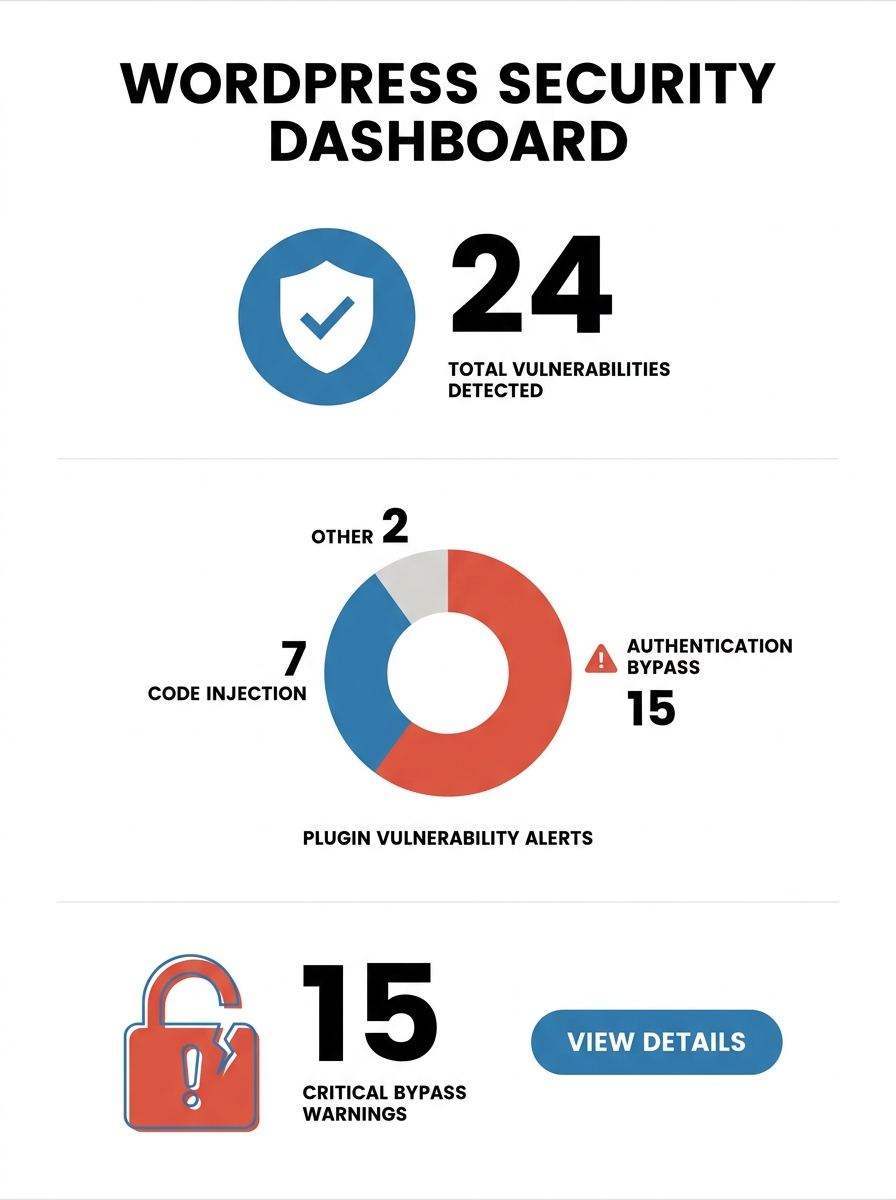
Authentication bypass vulnerabilities represented the largest category of exploitable flaws in 2026. These vulnerabilities occur when plugin endpoints fail to verify whether the requesting user is authenticated before executing sensitive operations. An attacker can trigger admin-level functions by directly accessing WordPress AJAX endpoints without logging in, the UnfoldCMS analysis explains.
The plugin review process at WordPress.org focuses on policy compliance rather than deep security auditing, with hundreds of plugins submitted weekly and minimal external scrutiny before publication. Once published, plugins execute with the same database access, file system privileges, and administrative capabilities as WordPress core software—no sandboxing or permission model limits what a calendar plugin or contact form can access. An estimated 35% of plugins in the WordPress.org repository have not received updates in 12+ months, yet many retain hundreds of thousands of active installations.
Defense Options Limited to Plugin Reduction and Managed Security Services
The UnfoldCMS report identifies three actionable countermeasures for agencies managing WordPress client sites: reducing total plugin count, subscribing to managed security services such as Patchstack or Wordfence Premium, and considering migration off WordPress for sites where security is a contractual requirement. Standard advice to "keep everything updated" proved insufficient in the April 2026 supply-chain attack, where users were compromised precisely because they had enabled automatic updates from trusted repository sources.
Agencies operating white-label WordPress infrastructure face an additional layer of risk when managing security across dozens or hundreds of client sites. A single compromised plugin deployed to a multi-tenant WordPress installation can expose every client site sharing that infrastructure, a vulnerability pattern documented in white-label multi-tenant identity architecture implementations. The supply-chain attack pattern—where legitimate plugins become malicious through developer account compromise or sale—bypasses traditional dependency scanning and vulnerability monitoring tools.
Why This Matters Now
Agency owners and operations leads managing WordPress development at scale need the 2026 vulnerability data to calibrate realistic security postures for client sites. The 250+ weekly vulnerability disclosure rate and 43% unauthenticated exploitation percentage represent baseline threat conditions, not anomalous spikes—this is the normal state of the WordPress plugin ecosystem going into the second half of 2026.
The April supply-chain attack demonstrates that plugin compromise now occurs through trust-model failures rather than traditional code vulnerabilities. Agencies that outsource white-label WordPress development to offshore partners or contractors must ensure partner vetting protocols include explicit security baseline requirements, including plugin audit procedures and update approval workflows. The standard practice of automatic plugin updates—once considered security best practice—now carries supply-chain risk that must be weighed against patch-delay risk.
For agencies maintaining 50+ client WordPress sites, the operational burden of monitoring 250+ weekly vulnerability disclosures and evaluating whether each affects the specific plugin versions deployed across a portfolio exceeds what internal teams can manually track. Managed security services like Patchstack and Wordfence Premium shift that monitoring burden to dedicated security operations teams, but require per-site or per-install licensing costs that agencies must build into client hosting packages. The alternative—manual plugin auditing and selective installation—works for low-volume agencies but doesn't scale past 20-30 concurrent client sites without dedicated security staff.