

CVE-2026-7311, a critical vulnerability in the TinyPNG WordPress plugin, allows authenticated attackers with author-level privileges to delete arbitrary server files including wp-config.php, BitNinja Security disclosed July 2. The flaw affects all versions through 3.6.13 due to insufficient file path validation in the plugin's delete functionality.
TL;DR: A critical vulnerability in TinyPNG WordPress plugin (CVE-2026-7311) lets authenticated attackers delete critical server files; all versions through 3.6.13 are affected and require immediate patching.
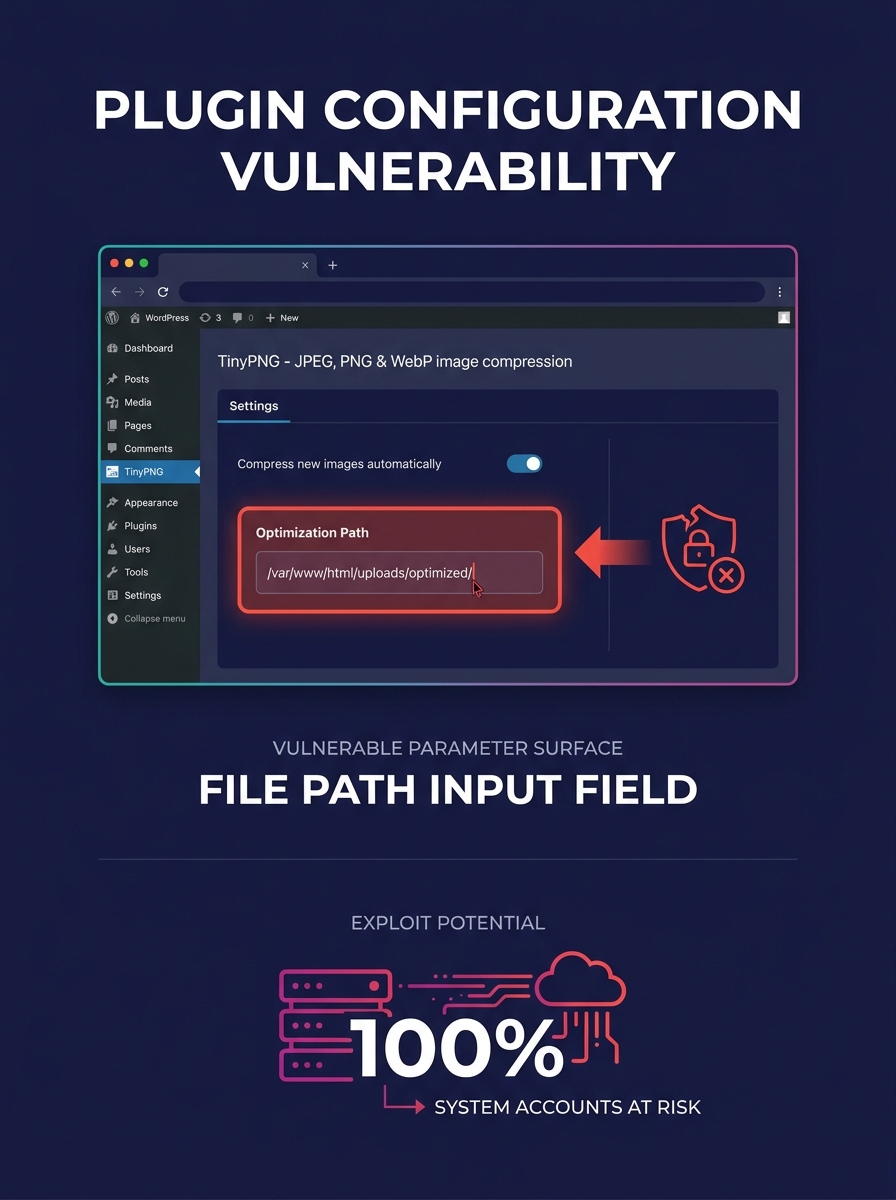
The vulnerability stems from inadequate input sanitization within the plugin's file management interface, according to BitNinja's technical analysis. Attackers holding author-level access or higher can manipulate file path parameters in the plugin's settings panel to target system-critical files beyond the plugin's intended directory scope. Deletion of wp-config.php, WordPress's primary configuration file containing database credentials and security keys, can lead to complete site compromise and potential remote code execution, the security firm stated.
TinyPNG, a widely-deployed image optimization plugin, processes millions of images monthly across WordPress installations. The plugin integrates with the TinyPNG API service to compress PNG and JPEG files, making it a common dependency in agency client portfolios focused on Core Web Vitals performance optimization.
Attack Vector Requires Existing Site Access
The exploit requires an authenticated WordPress user account with author-level permissions or higher, BitNinja's alert noted. Unlike unauthenticated vulnerabilities that dominated 2026 plugin disclosures, CVE-2026-7311 cannot be triggered by external attackers without compromised credentials. However, agencies managing multi-author client sites, particularly publisher sites, membership platforms, and client portals with guest contributor access, face elevated exposure.
"Attackers can manipulate file paths in the plugin's settings to delete critical server files," BitNinja researchers wrote in the disclosure. The vulnerability's CVSS severity score was not published in the initial alert, though the arbitrary file deletion capability and wp-config.php targeting place it in the high-to-critical range under standard Common Vulnerability Scoring System methodology.
The flaw exists in TinyPNG versions up to and including 3.6.13. BitNinja's disclosure did not specify whether a patched version has been released or whether the plugin developer has issued a security advisory. No CVE assignment date was provided separate from the July 2 public disclosure.
Immediate Remediation Steps for Agency Portfolios
BitNinja Security outlined four immediate mitigation actions in the alert. First, update the TinyPNG plugin to the latest available version. Plugin version history checks and automated update enforcement should be standard practice across white-label client portfolios, particularly following the Awesome Motive plugin backdoor incident earlier this year that affected 1.2 million sites.
Second, implement or verify web application firewall rules blocking suspicious file path manipulation patterns. Managed WordPress hosting providers including WP Engine, Kinsta, and Flywheel deploy WAF protections by default, but agencies hosting client sites on VPS infrastructure or unmanaged hosting tiers must configure rules manually. BitNinja's own server protection platform includes file path traversal detection in its standard ruleset.
Third, audit user role assignments across all client installations and restrict author-level access to verified contributors only. The WordPress user role hierarchy grants author-level users publication rights and media library access, sufficient permissions to trigger the TinyPNG vulnerability. Agencies operating client sites with guest bloggers, freelance writers, or partner contributor accounts should review access logs and downgrade permissions where full authorship capabilities are unnecessary.
Fourth, if image optimization can be handled through alternative plugins or CDN-level compression, remove TinyPNG entirely to eliminate the attack surface. ShortPixel, Smush, and Imagify provide comparable compression functionality, while Cloudflare Polish and AWS CloudFront include automatic image optimization at the edge network layer for agencies already using those platforms.
Plugin Vulnerability Disclosure Rate Context
The TinyPNG disclosure arrives amid sustained elevated plugin vulnerability reporting throughout 2026. WordPress ecosystem security monitoring documented 250+ weekly plugin vulnerability disclosures through mid-2026, with 43% exploitable without authentication and 23% remaining unpatched 30 days post-disclosure, according to June analysis by UnfoldCMS.
BitNinja's disclosure follows recent high-severity alerts including NEX-Forms data access flaws, Ultimate Member password reset exposure, and Gravity SMTP credential leaks. The sustained disclosure velocity underscores the necessity of automated vulnerability scanning and update protocols in white-label agency operations managing dozens to hundreds of client WordPress installations.
No evidence of active exploitation has been published in conjunction with the CVE-2026-7311 disclosure. Vulnerability disclosure timelines typically allow 90 days between private vendor notification and public CVE assignment, though BitNinja's alert does not specify whether coordinated disclosure protocols were followed or whether the plugin vendor received advance notification.
What This Means for Agency Owners
Agencies running TinyPNG across client portfolios should treat this as a same-day emergency patch cycle. The author-level access requirement provides limited protection, compromised contributor accounts, phishing attacks targeting client content teams, and insider threats all create viable exploitation paths. The ability to delete wp-config.php moves this beyond typical plugin vulnerabilities into complete site takeover territory.
Build a rapid-response vulnerability protocol if you don't have one: a scripted process for inventory checks (which clients run which plugin versions), staging environment patch testing, and production deployment windows. The Awesome Motive backdoor incident demonstrated that multi-site compromises through supply chain attacks can affect millions of installations within hours. Speed matters.
Document this incident in client communications even after patching. Proactive security disclosure builds trust and differentiates white-label partners who treat client infrastructure as production-grade systems rather than fire-and-forget deployments. Include TinyPNG in your standard plugin audit rotation and consider shifting to CDN-based image optimization where compression at the origin server introduces unnecessary plugin dependencies and attack surface.