

WPForms Lite version 2.0.0 generates one-hour authentication tokens during plugin setup that grant developer Awesome Motive administrative access to install software on user sites without explicit consent, according to accusations posted August 11, 2026, by The SEO Framework publisher Sybre Waaijer. The plugin is active on more than 5 million WordPress installations.
TL;DR: A widely-deployed WordPress form plugin's onboarding wizard issues temporary admin tokens to its publisher's servers, enabling automatic installation of third-party plugins—a practice sparking debate over whether it constitutes a security backdoor or legitimate setup automation.
The functionality resides in the file wpforms-lite/src/SetupWizard/Bridge.php introduced in version 2.0.0, released approximately three weeks before the disclosure. The wizard redirects administrators to Awesome Motive's servers during initial setup and transmits a session token valid for one hour or until setup completion, whichever comes first.
"It takes over your browser and opens their app on WPForms' servers," Waaijer wrote in an August 11 post. "Their app can then act on your behalf on your site."
What the Plugin Does
The authentication token enables Awesome Motive to install and activate 13 plugins from the WordPress.org repository—including WP Mail SMTP, AIOSEO, Uncanny Automator, OptinMonster, and MonsterInsights—plus proprietary WPForms add-ons and Pro versions hosted on Awesome Motive's own servers. The wizard can also enable a setting that transmits form submission data to WPForms' servers, according to Waaijer's technical analysis.
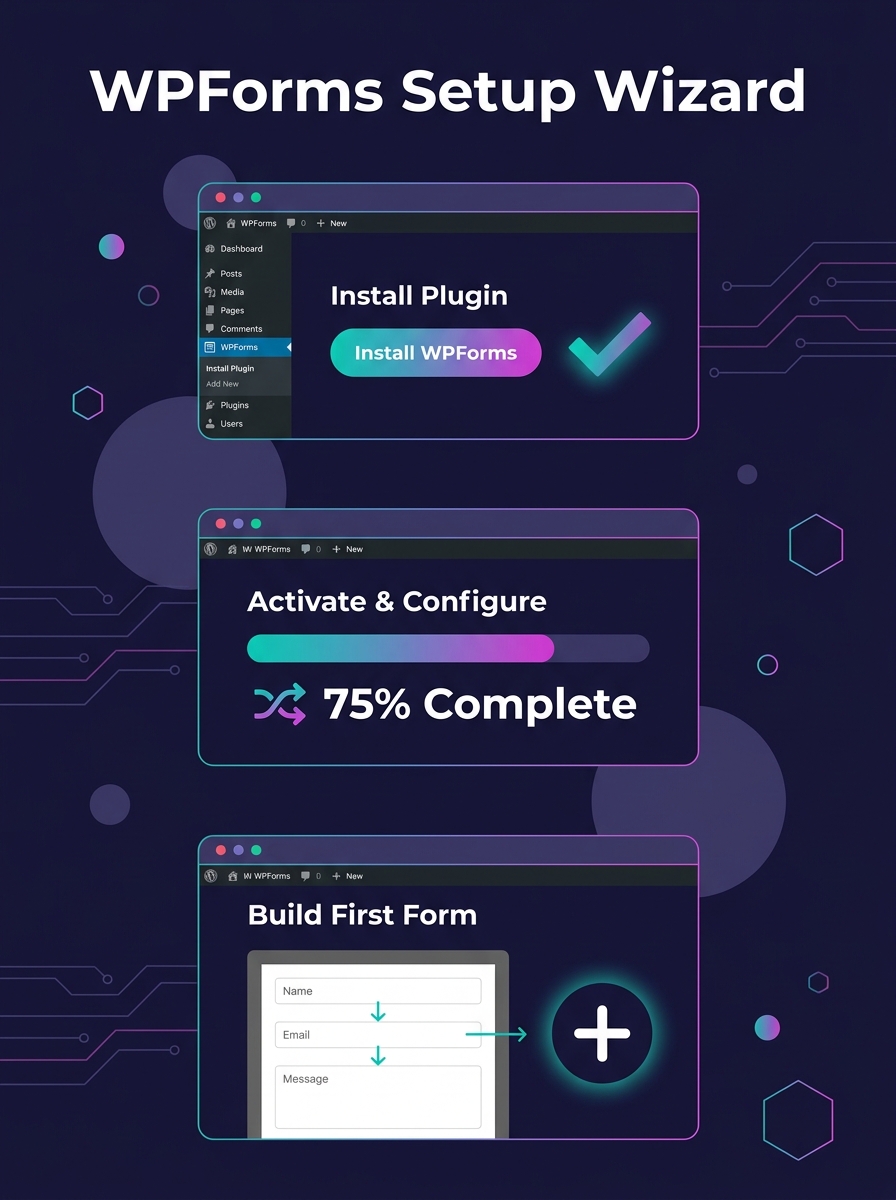
Search Engine Journal editor Roger Montti installed WPForms Lite on a test site and confirmed the wizard redirects to an external domain—wpforms.com—during setup. The configuration screens appeared within the WordPress admin interface but loaded from Awesome Motive's servers rather than the site operator's installation. Montti's test showed the wizard installed WPConsent and other plugins without providing opt-out options for some features.
The functionality activates only when a site administrator runs the onboarding wizard on a fresh installation. No evidence indicates the token mechanism functions outside the setup context or that Awesome Motive can initiate connections independently after initial configuration.
Community Response and Competitive Context
WordPress community members debated whether the functionality constitutes a backdoor under the National Institute of Standards and Technology definition—"an undocumented way of gaining access to computer system"—or represents standard onboarding automation.
User Marc Kranat challenged the backdoor characterization, noting the process "requires a logged-in administrator to actually trigger the wizard" and lacks vendor-initiated access paths or authentication bypass mechanisms that define traditional backdoors.
Waaijer disclosed a competitive relationship with Awesome Motive; both companies publish SEO plugins—The SEO Framework and All In One SEO, respectively. "For years, they've been cross-installing their plugins and deactivating their competitors', including mine," Waaijer wrote in response to criticism of public disclosure.
BuildInBits, another WordPress developer, argued Waaijer should have reported the concerns privately to Awesome Motive before posting publicly, describing the company as a "trusted" plugin publisher with a decade-long track record.
Installation Behavior Confirmed in Testing
Montti's test installation showed the wizard screen appeared immediately after plugin activation, with no explicit indication the configuration interface had redirected to an external domain. The URL bar displayed wpforms.com/lite/welcome rather than the site operator's own domain.
The wizard's "Select Your Features" screen pre-selected "AI Form Generation" and "Privacy Compliance" options with checkboxes that could not be deselected, according to Montti's screenshots. A notice at the bottom of the screen stated the free WPConsent plugin would be installed, with no opt-out mechanism provided.
The behavior affects sites across the WordPress ecosystem, which reported 250-plus weekly plugin vulnerabilities through 2026, 43 percent exploitable without authentication. Security guidance published in August warned agencies that automated exploit attempts begin within hours of vulnerability disclosure, often before site administrators receive alerts.
Reading Between the Lines
Agency operations teams managing client WordPress portfolios face immediate decisions: audit which client sites run WPForms Lite 2.0.0, determine whether the onboarding wizard has executed, and assess whether automatically-installed plugins align with client security policies. For white-label development shops, the incident raises questions about how thoroughly setup wizards disclose third-party server interactions—especially when wizard interfaces mimic native WordPress admin screens closely enough that even experienced developers miss the domain redirect.
The competitive angle complicates risk assessment. Waaijer's claim that Awesome Motive "deactivates" competitor plugins during setup carries operational implications if true—agencies recommending specific plugin stacks to clients need visibility into whether those recommendations can be programmatically overridden by onboarding flows. The absence of documented disclosure about token generation and server-side plugin installation suggests the need for agencies to test wizard behavior in isolated environments before deploying plugins to production, even from publishers with established reputations.
For agencies evaluating the "backdoor" classification: the token expires, requires admin action to initiate, and functions within documented setup processes—but the absence of explicit consent prompts and the external server control over what gets installed moves the practice closer to opaque automation than transparent setup assistance. Client handoff documentation should now include which onboarding wizards were completed, what they installed, and whether those installations align with the agreed technology stack.