

A 60-point technical checklist for WordPress performance optimization published September 13 by Abbacus Technologies positions site speed testing as a development-phase deliverable rather than post-launch remediation, according to the framework documentation. The guide targets agencies managing client launches and addresses hosting configuration, plugin auditing, database optimization, Core Web Vitals benchmarking, and mobile-network testing before production deployment.
TL;DR: Abbacus Technologies published a comprehensive WordPress performance checklist September 13 that frames speed optimization as a pre-launch development task, covering 60 technical checkpoints from hosting selection through Core Web Vitals measurement.
The checklist approach treats performance testing as parallel to functionality QA rather than a separate post-launch project. "A website that looks excellent in a development environment can become noticeably slower when real visitors, search-engine crawlers, third-party scripts, large images, plugins, analytics tools, and hosting limitations enter the picture," the Abbacus Technologies documentation states.
The framework segments optimization work into infrastructure decisions made during project kickoff—hosting tier selection, theme choice, page-builder evaluation—and implementation-phase tasks including image compression workflows, JavaScript reduction, caching layer configuration, and staged environment performance parity testing. The guide specifies that agencies should establish performance budgets during the discovery phase and validate against those thresholds before client handoff.
Infrastructure and Plugin Baseline Recommendations
The published checklist includes specific guidance on WordPress hosting environment selection, recommending agencies evaluate Time to First Byte performance under realistic traffic conditions before committing clients to annual contracts. The framework advises testing hosting providers with WordPress-specific configurations including PHP 8.1 or higher, object caching support, and CDN integration capabilities.
Plugin auditing appears as a pre-launch requirement in the checklist. The guide recommends agencies maintain a plugin-by-plugin performance baseline using Query Monitor or similar diagnostic tools to identify database query overhead, HTTP request counts, and server-side processing time attributable to individual plugins. The documentation states that page builders including Elementor require specific optimization configurations to avoid excessive DOM elements and CSS delivery blocking.
The framework addresses database optimization through revision cleanup, transient expiration, and autoload option review as standard pre-launch tasks. Agencies using WooCommerce receive separate guidance on product catalog query optimization and checkout-page performance isolation.
Core Web Vitals Measurement Before Production
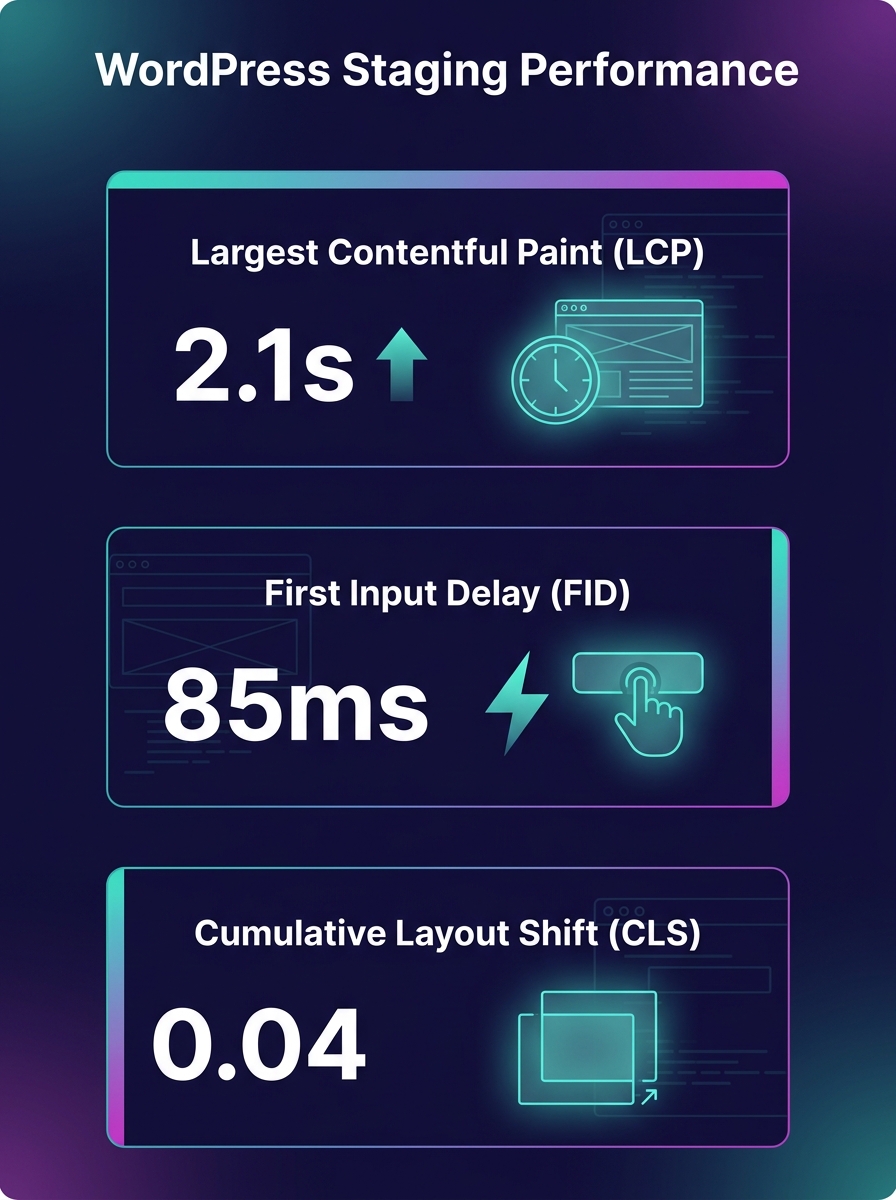
The Abbacus checklist specifies Largest Contentful Paint, Interaction to Next Paint, and Cumulative Layout Shift testing requirements before site launch. The framework recommends agencies conduct Core Web Vitals measurement on staging environments using mobile 4G network throttling to match field data collection conditions.
The documentation distinguishes between lab-based performance scores from tools including Google PageSpeed Insights and field performance measured through Real User Monitoring. The guide states that agencies should establish baseline performance metrics during staging review and configure post-launch monitoring to detect performance regression.
The checklist includes mobile-specific testing protocols, recommending agencies validate performance on actual mobile devices rather than desktop browser emulation. The framework specifies testing with cleared browser caches to simulate first-time visitor conditions and with warm caches to measure returning-visitor performance.
Staging-to-Production Workflow Integration
The published framework treats performance validation as a staging-environment gate before production deployment. The checklist recommends agencies establish staging-to-production workflows that include performance regression testing after plugin updates, theme modifications, or content migrations.
The guide addresses third-party script management, analytics pixel overhead, marketing automation integrations, and social media embed performance as launch-blocking issues requiring client approval when performance budgets cannot be met. The documentation states that agencies should present clients with explicit trade-offs between conversion tracking granularity and page load time when analytics overhead exceeds established thresholds.
The framework includes guidance on establishing post-launch monitoring using Google Search Console Core Web Vitals reporting and Real User Monitoring tools. Agencies are advised to configure alerts for performance degradation triggered by plugin updates or traffic volume changes.
Why This Matters Now
Performance optimization as a pre-launch deliverable creates a differentiation point for white-label development services competing on client retention rather than initial project pricing. Agencies that deliver performance-validated sites during the handoff phase avoid post-launch emergency optimization work billed as change orders, which clients increasingly view as development oversight rather than scope expansion.
The shift toward treating performance as a development-phase requirement aligns with Google's September 2024 expansion of Core Web Vitals as ranking signals and the documented correlation between load speed and conversion rates. Agencies that present clients with performance audit reports during staging review position speed optimization as a standard deliverable rather than an upsell, reducing friction during project closeout.
The framework's emphasis on mobile-network testing addresses the growing share of agency client traffic originating from mobile devices with slower connectivity than desktop broadband. Agencies serving e-commerce clients using WooCommerce can use pre-launch performance baselines to establish measurable service-level agreements tied to checkout completion rates and cart abandonment metrics.