

A high-severity vulnerability designated CVE-2026-14873 was disclosed September 10 in the Bulk Password Reset plugin for WordPress, enabling authenticated users with subscriber-level permissions to escalate privileges and take control of administrator accounts, according to TheHackerWire. The flaw affects all plugin versions up to and including 1.3.3, carrying a CVSS severity score of 8.0.
TL;DR: The Bulk Password Reset plugin for WordPress contains a privilege escalation flaw allowing subscriber-level attackers to change administrator passwords and email addresses, leading to full account takeover.
Authentication Bypass Allows Arbitrary Password Changes
The vulnerability stems from the plugin's failure to properly validate user identity before updating account details, according to the CVE record published by Wordfence. The flaw enables attackers with subscriber-level access to modify arbitrary user passwords, including those of site administrators, to a known plugin-configured value.
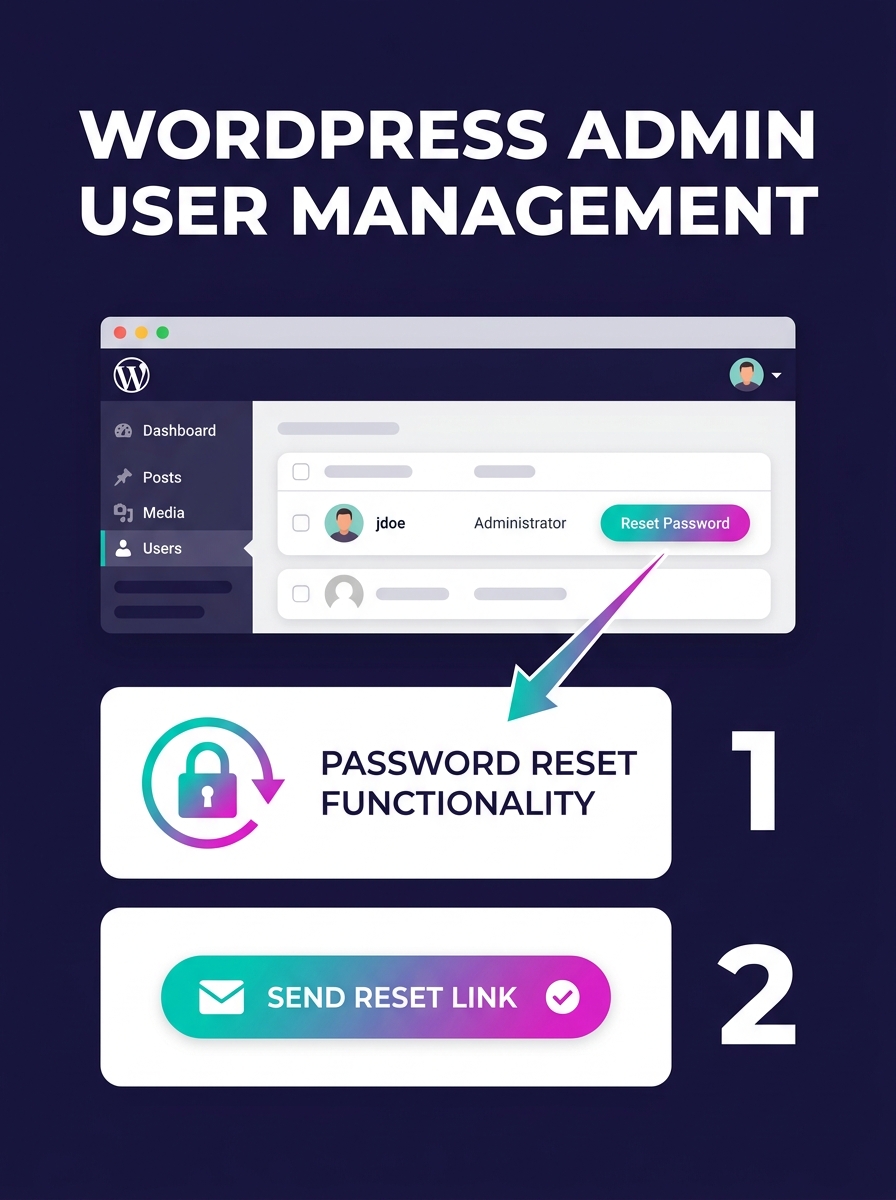
The attack vector requires low privileges and user interaction but can be executed remotely over a network connection. Wordfence's threat intelligence database identifies the weakness as CWE-862, a missing authorization check that fails to verify whether the requesting user has permission to perform password reset operations on other accounts.
The plugin's code shows that password reset functions at lines 594, 659, and 679 of the bulk_password_reset.php file lack sufficient identity verification before executing changes to user credentials, according to the plugin's Trac repository references in the disclosure.
Account Takeover Chain Targets Email Modification
Attackers can use the vulnerability to change a target user's email address first, then use WordPress's standard password reset workflow to gain full access to the compromised account. This two-step process enables complete account takeover without requiring any existing knowledge of the victim's current password.
The vulnerability carries high impact ratings for confidentiality, integrity, and availability in CVSS scoring, reflecting the complete compromise possible when an administrator account falls under attacker control. Agencies managing client WordPress installations should audit for the presence of the Bulk Password Reset plugin across their portfolio and remove or disable it until a patched version becomes available.
This disclosure follows a pattern of WordPress plugin vulnerabilities requiring immediate agency response, with security researchers warning that exploits typically appear within hours of public disclosure. The Bulk Password Reset plugin's specific attack path—targeting user management functions—parallels recent flaws in other administrative plugins that have drawn attention from the WordPress Core Security Initiative.
Scope Extends to All User Role Levels
The privilege escalation mechanism works regardless of the target user's role level, meaning subscriber-level attackers can compromise not only administrator accounts but also editor, author, contributor, and other subscriber accounts. This broad scope increases the vulnerability's potential impact in multi-author WordPress environments common to digital publishers and membership sites.
No active exploitation has been reported in the CVE disclosure, but the vulnerability's public documentation now provides a complete technical roadmap for attackers. The plugin's Trac repository shows no update activity addressing the flaw as of the September 10 disclosure date, according to the linked source code references.
Agencies operating white-label WordPress development workflows should implement immediate inventory checks across managed client sites, particularly for installations using subscriber-level user registration or membership functionality. Sites enabling public user registration face elevated risk, as attackers can create low-privilege accounts and then exploit the flaw to escalate to full administrative control.
No Patch Available at Disclosure Time
The CVE record shows version 1.3.3 as the most recent affected release, with no indication of a patched version 1.3.4 or later. This absence of a remediation path leaves agencies with three options: remove the plugin entirely, disable it until an update ships, or implement web application firewall rules to block the specific attack vector.
Agencies that hire web developers to maintain client WordPress infrastructure should prioritize this vulnerability in immediate security reviews, particularly for sites where the Bulk Password Reset plugin serves an active business function. The lack of a straightforward patch complicates the typical update-and-monitor response pattern agencies use for most plugin vulnerabilities.
The disclosure joins a recent series of WordPress plugin security flaws affecting millions of installations, including critical vulnerabilities in Elementor Pro and Super Forms that triggered more than 440,000 exploitation attempts. The escalating frequency of such disclosures has prompted WordPress core maintainers to accelerate detection and patching workflows.
Reading Between the Lines
This vulnerability represents a particularly dangerous class of WordPress security flaw—one that requires only subscriber-level access to compromise an entire installation. For agencies managing white-label WordPress development, the disclosure underscores the importance of maintaining plugin inventories across client portfolios rather than relying on site-by-site manual audits when vulnerabilities emerge.
The absence of a patch at disclosure time compounds the operational burden. Agencies cannot simply schedule an update cycle; they must assess whether clients actively use the plugin's functionality, identify replacement tools if removal is viable, and communicate risk to clients if the plugin must remain active until a fix ships. This decision tree consumes project management capacity that agencies running lean operations may not have readily available.
The vulnerability's low attack complexity and high impact scores make it an attractive target for automated exploitation tools. Agencies should expect scanning activity to begin within 24 to 48 hours of this disclosure, based on historical patterns from similar WordPress plugin flaws. Sites with public user registration should receive priority in any emergency audit queue.