

CVE-2026-12404, a critical authorization bypass vulnerability in the NEX-Forms WordPress plugin, allows unauthenticated attackers to download sensitive form submission data from sites running versions up to 9.2.2, according to a security advisory published by BitNinja on June 27, 2026. The flaw affects agencies managing client sites that collect names, email addresses, and payment information through WordPress forms.
TL;DR: NEX-Forms plugin versions through 9.2.2 fail to verify user authorization, letting attackers enumerate and download report submissions without authentication—update immediately to protect client form data.
The vulnerability stems from inadequate user authorization checks in the plugin's code. Attackers can exploit the flaw to enumerate form submission records and extract data without logging into WordPress or possessing any user credentials. BitNinja's advisory notes that exposed data types include personal identifiers, email addresses, and payment details submitted through NEX-Forms instances.
White-Label Agency Impact
Agencies deploying NEX-Forms across client portfolios face immediate operational risk. A single vulnerable installation creates exposure for contact forms, lead generation tools, payment collection interfaces, and customer support ticketing systems. The authorization bypass operates at the WordPress core level, meaning attackers can access form data regardless of front-end access controls or membership plugin configurations.
The disclosure follows a pattern of WordPress plugin authorization failures documented in 2026. Ultimate Member patched a similar authenticated vulnerability affecting 200,000 sites three days earlier, while Gravity SMTP's credential-leaking flaw triggered 17 million exploitation attempts in May. CVE-2026-12404 ranks higher on severity scales because it requires no authentication—any internet-connected attacker can probe for vulnerable installations.
Mitigation Requirements
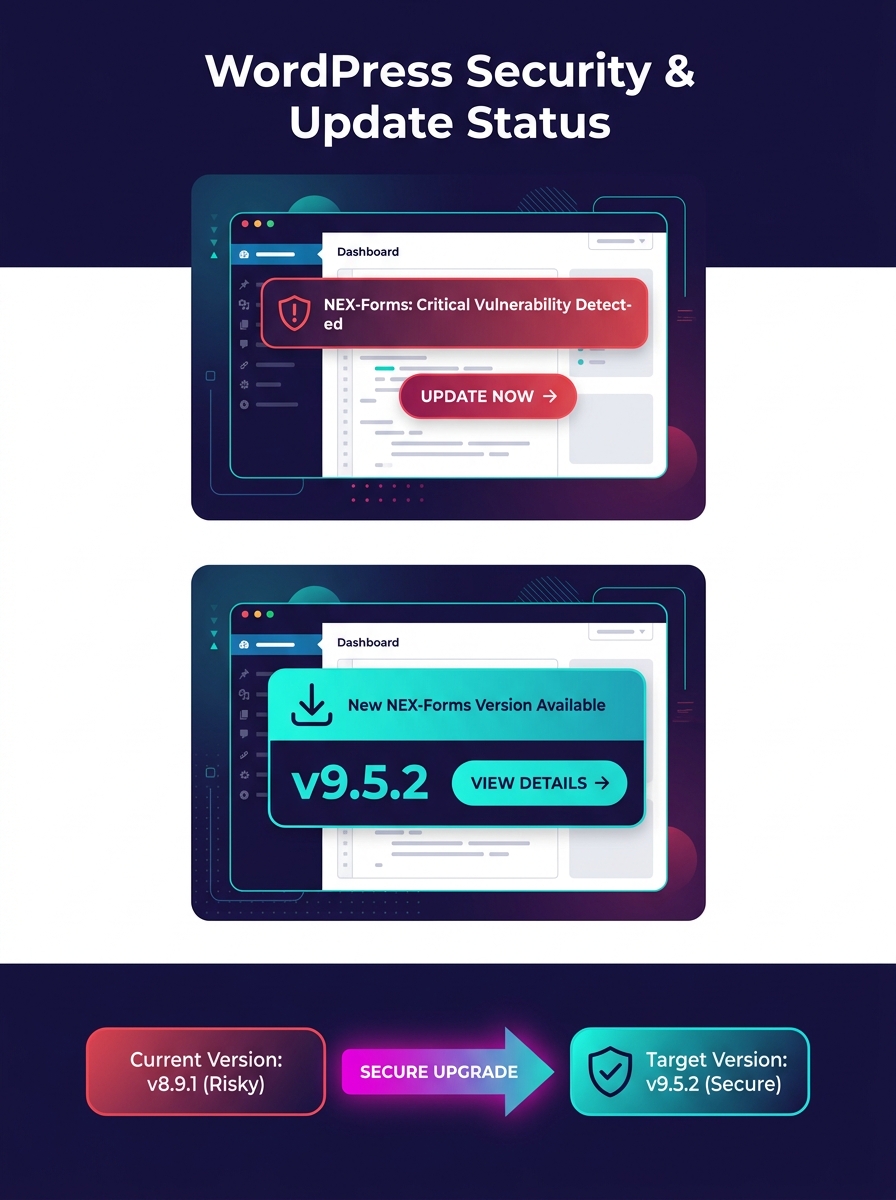
BitNinja's advisory specifies three actions for server administrators and agency operators. First, update NEX-Forms to any version released after 9.2.2. The plugin maintainers pushed a patched release within hours of the CVE publication, according to the WordPress.org plugin repository changelog. Second, audit server logs for unusual form submission access patterns between the plugin's initial vulnerable release and the patch deployment date. Third, implement web application firewall rules that block unauthenticated requests to NEX-Forms data endpoints.
Agencies running white-label operations should cross-reference their client site inventory against the NEX-Forms install base. The plugin reports approximately 50,000 active installations according to WordPress.org metrics. Sites using NEX-Forms for payment forms, GDPR-regulated contact collection, or healthcare intake questionnaires face compliance exposure if attackers accessed submission data before patching occurred.
Detection and Forensics
The advisory recommends malware detection scans across hosting environments where NEX-Forms runs. Attackers who exploited CVE-2026-12404 before disclosure may have planted secondary access mechanisms—backdoor PHP files, compromised admin accounts, or database credential harvesting scripts. BitNinja notes that web application firewalls provide post-patch defense against brute-force enumeration attempts targeting the same code paths.
Server logs showing POST requests to /wp-admin/admin-ajax.php with NEX-Forms action parameters from unauthenticated sessions indicate potential exploitation. Agencies should correlate these requests against client IP whitelists and geographic access patterns. Any anomalous download activity originating from unfamiliar IP ranges warrants further investigation.
Hosting providers managing multi-tenant WordPress environments face concentrated risk. A single vulnerable NEX-Forms installation on a shared hosting plan does not create lateral movement opportunities, but attackers scanning IP ranges for the vulnerability pattern can compromise multiple client sites in sequence. The white-label WordPress security baseline framework recommends automated plugin version audits as standard practice—CVE-2026-12404 demonstrates why version monitoring must trigger immediate action workflows rather than monthly review cycles.
The Takeaway
CVE-2026-12404 underscores the authorization verification gap that continues to plague WordPress plugin ecosystems. For agencies managing client portfolios, the vulnerability shifts plugin update protocols from "maintenance task" to "immediate operational requirement." The 50,000-installation footprint means white-label partners likely deployed NEX-Forms across multiple client sites—each requiring individual patching, log review, and security confirmation.
The authorization bypass pattern appears with increasing frequency. Three high-profile WordPress plugin CVEs disclosed in June 2026 share the same root cause: insufficient user permission checks before serving sensitive data. Agencies should treat plugin authorization as a first-class audit category during partner vetting and pre-deployment reviews. The patch availability timeline—hours after disclosure—demonstrates that plugin maintainers can respond quickly when vulnerabilities surface, but the window between vulnerability introduction and public disclosure remains the critical exposure period.
Client communication matters here. Agencies that proactively notified affected clients, confirmed patch deployment, and documented the security response demonstrate operational maturity that differentiates white-label partnerships from commodity WordPress hosting. The NEX-Forms incident provides a concrete example for updating service-level agreement language around security incident response windows and patch deployment guarantees.