

Automated bots begin probing WordPress sites for newly disclosed plugin vulnerabilities within hours of public disclosure, often before site administrators receive alerts, according to security guidance published August 4, 2026, by OOPSpam, the spam protection platform. The guidance emphasizes immediate patching or deactivation over waiting for maintenance windows, citing the compressed timeline between disclosure and active exploitation as a critical operational risk for agencies managing multiple client sites.
TL;DR: OOPSpam published WordPress vulnerability response guidance on August 4, 2026, emphasizing that automated exploitation begins within hours of disclosure and recommending immediate patching, deactivation, or deletion of affected plugins before checking for compromise.
Patch-or-Remove Window Measured in Hours
The gap between vulnerability disclosure and exploitation is now measured in hours rather than days, according to the OOPSpam guidance. Once a plugin flaw becomes public, automated scanning tools immediately begin testing sites for the affected version. The guidance instructs site administrators to update to patched versions immediately upon disclosure, without waiting for scheduled maintenance windows.
If no patch exists, the guidance recommends deactivating or deleting the vulnerable plugin entirely. "A disabled plugin can't be exploited," the document states, advising administrators to search for replacement functionality only after neutralizing the immediate threat. The approach prioritizes threat elimination over service continuity.
Post-Patch Compromise Detection Protocol
Patching prevents new attacks but does not reverse existing compromises, the guidance notes. Administrators should inspect sites for five indicators of successful exploitation: unauthorized administrator accounts, recently modified core or plugin files, unexpected redirects or pop-ups, unrecognized scheduled tasks, and unfamiliar files in uploads or plugin directories.
If any indicators appear, OOPSpam recommends treating the site as compromised. The response protocol includes restoring from clean backups, rotating all passwords and API keys, and considering professional malware cleanup before returning the site to production. The guidance does not specify a timeframe threshold for when post-disclosure checks become unnecessary.
Continuous Monitoring Tool Flags Abandonment Risk
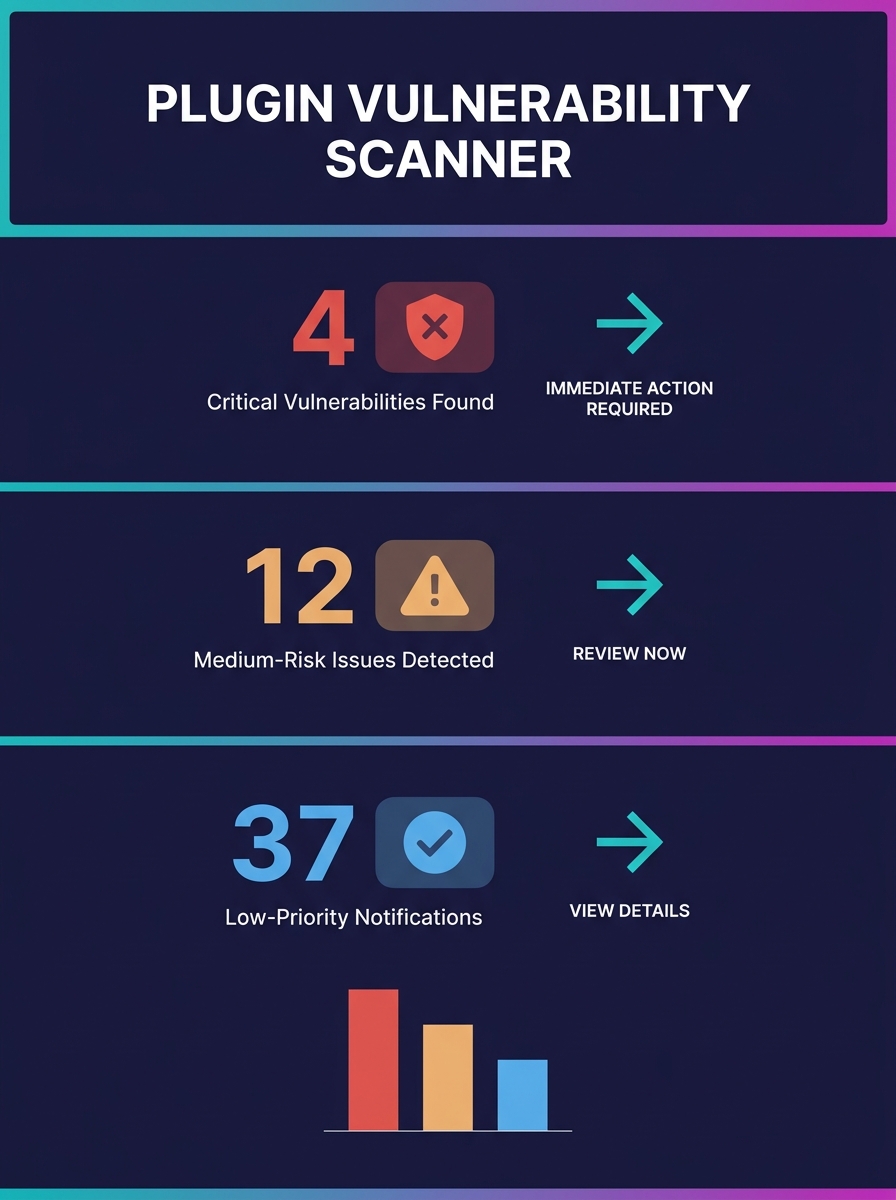
OOPSpam introduced OOPVulns, a free plugin that scans WordPress core, installed plugins, and themes against a live vulnerability database. The scanner displays results with color-coded severity levels—Critical, High, Medium, Low—and indicates whether fixes are available, according to the guidance. Scanning is opt-in and can run daily or weekly with email alerts when new vulnerabilities appear.
The tool also assigns a neglect score to each plugin based on WordPress.org signals including last-updated dates and unresolved critical support threads. Plugins receive badges such as "Slow maintenance" or "Likely abandoned." The abandonment detection feature addresses a recurring agency challenge: identifying which plugins require replacement before they trigger incidents. Agencies managing WordPress development for multiple clients face compounding risk when a single vulnerable plugin appears across dozens of sites.
"A plugin that already caused one incident and is no longer actively maintained is a strong candidate for replacement, not a second chance," the guidance states. Only plugin slugs, versions, and WordPress core version are transmitted during scans; no personal data or site content leaves the server, according to OOPSpam.
Long-Term Hardening Steps
The guidance recommends deleting deactivated plugins entirely rather than leaving them on the server. Deactivated plugins remain accessible as files and can be exploited if reactivated or directly accessed. Administrators should remove any plugin or theme not actively in use.
OOPSpam also recommends maintaining recent, verified backups stored off-site and testing restore processes before incidents occur. "A backup you've never restored from is a guess, not a safety net," the guidance states. The document includes a quick-reference table mapping five scenarios (patch available, no patch available, compromise detected, unmaintained plugin, early detection desired) to immediate actions.
The WordPress ecosystem reported 250+ weekly plugin vulnerabilities through 2026, with 43% exploitable without authentication, creating continuous exposure for agencies operating at scale. Sites compromised through the wp2shell vulnerability chain subsequently delivered credential phishing and malware to visitors, demonstrating the cascading impact of unpatched plugin flaws.
What Happens Next
Agencies managing white-label WordPress sites for multiple clients face multiplied exposure when a single plugin vulnerability affects dozens of deployments simultaneously. The hours-long exploitation window described in the OOPSpam guidance compounds this risk: a vulnerability disclosed on a Friday afternoon may be actively exploited across an agency's entire client portfolio before Monday morning.
OOPVulns' abandonment scoring addresses a distinct operational problem: identifying which plugins to remove before they trigger incidents, not just after. The neglect score translates WordPress.org maintenance signals into actionable risk assessment, allowing agencies to prioritize replacement projects based on developer activity patterns rather than waiting for CVE disclosures.
The continuous scanning model shifts vulnerability management from reactive ticket-based responses to scheduled monitoring workflows. Agencies operating dedicated WordPress development teams can integrate daily scans into deployment pipelines, treating vulnerability checks as quality gates rather than emergency procedures. The compressed timeline between disclosure and exploitation leaves no margin for manual checking or batched update cycles.