

A statistics compilation published August 24 documents that every 100 milliseconds of page load delay correlates with approximately 1% lower conversion rates, according to industry data assembled by Mean CEO. The research aggregates 2025–2026 performance studies from Shopify, Portent, Google, and platform case studies showing mobile abandonment and revenue impact tied to Core Web Vitals metrics.
TL;DR: A new statistics compilation shows each 100ms of page delay costs about 1% in conversions, with mobile visitors abandoning 53% of pages that take over 3 seconds to load.
The compilation, authored by entrepreneur Violetta Bonenkamp, draws from Chrome User Experience Report field data, ecommerce platform benchmarks, and published case studies to connect website performance directly to sales and lead-generation outcomes. The document targets startup founders and business operators who view speed as a technical concern rather than a revenue factor.
Core Web Vitals Performance Tied to Revenue Gains
Rakuten reported 33.13% higher conversion rates and 53.37% more revenue per visitor following Core Web Vitals optimization work, according to the compiled case studies. Vodafone Italy improved Largest Contentful Paint by 31% and recorded 8% more sales. RedBus saw a 7% sales increase after improving Interaction to Next Paint responsiveness metrics.
Yelp reduced mobile First Contentful Paint from 4.4 seconds to 1.8 seconds and measured 15% more conversions on contact pages, the compilation shows. Google research cited in the document found that reducing load time from 3 seconds to 1 second can lift conversions by up to 27%.
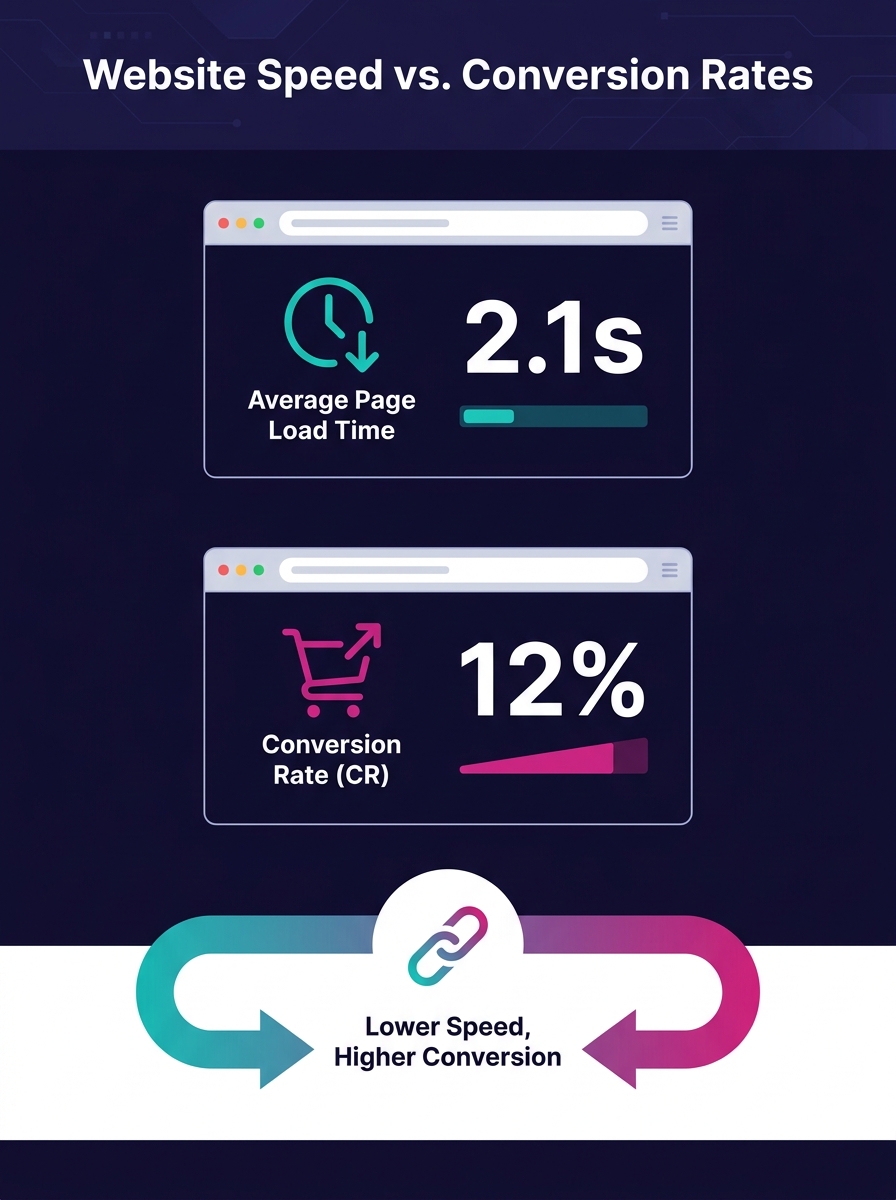
Shopify data included in the compilation indicates that every 100 milliseconds of additional load time corresponds to approximately 3.5% lower conversion rates on ecommerce sites. Portent research documented conversion rates dropping from 3.05% at one-second load times to 0.41% at five-second load times.
Mobile Abandonment Threshold Remains at 3 Seconds
Fifty-three percent of mobile visits are abandoned when pages take longer than 3 seconds to load, according to mobile traffic research cited in the compilation. The statistic reflects 2025–2026 mobile browsing behavior and applies across industries and geographies.
Field data from Core Web Vitals monitoring shows that 49.1% of the mobile web currently passes Core Web Vitals assessment thresholds in 2026, meaning roughly half of mobile pages fail on Largest Contentful Paint, Interaction to Next Paint, or Cumulative Layout Shift metrics. The pass rate represents a benchmark for agencies evaluating client site performance against industry norms.
The compilation notes that mobile delay affects lead-generation and service business sites as well as ecommerce platforms. Performance metrics measured through real user monitoring show that pages can appear visually loaded but still register as unresponsive if Interaction to Next Paint scores remain poor.
Statistics Sourced From Platform Benchmarks and Field Data
The compilation methodology draws from Shopify website load time statistics, PageSpeed Matters Core Web Vitals pass rate studies, and published case-study summaries documented on web.dev and platform performance research published in 2025 and 2026. The document does not present original research but aggregates existing industry studies into a single reference.
Numbers derived from Chrome User Experience Report data reflect real-world performance measured across diverse traffic sources, devices, and connection speeds. The compilation flags that conversion impact varies by industry, traffic quality, and user intent, cautioning against treating the statistics as universal guarantees.
The document positions website speed as a margin issue rather than a technical optimization task, framing millisecond delays as direct revenue leakage that compounds over time. It argues that founders operating with constrained budgets experience speed problems as boosted waste because each lost conversion represents marketing spend without return.
Agencies Implications
Digital agencies managing WordPress client sites can use the compiled statistics to reframe performance optimization as a revenue-recovery project rather than a technical maintenance task. The documented conversion lift from Core Web Vitals work—ranging from 7% to 33% depending on the metric improved—provides a business-case template for pitching performance audit engagements to clients who view speed as secondary to design or feature requests.
The 49.1% Core Web Vitals pass rate on mobile means that roughly half of client sites delivered by agencies likely fail Google's performance thresholds, creating an addressable service gap. Agencies with WordPress performance expertise can position optimization as competitive differentiation when prospects compare vendor proposals, particularly for ecommerce and lead-generation projects where conversion rates directly determine ROI.
For agencies evaluating white-label partnerships or considering whether to hire web developers with performance specialization, the revenue-per-visitor gains documented in the Rakuten and Vodafone cases justify dedicating capacity to speed work rather than treating it as an afterthought added during final QA. The statistics support pricing performance optimization as a standalone deliverable with measurable business outcomes rather than bundling it invisibly into broader development engagements.