

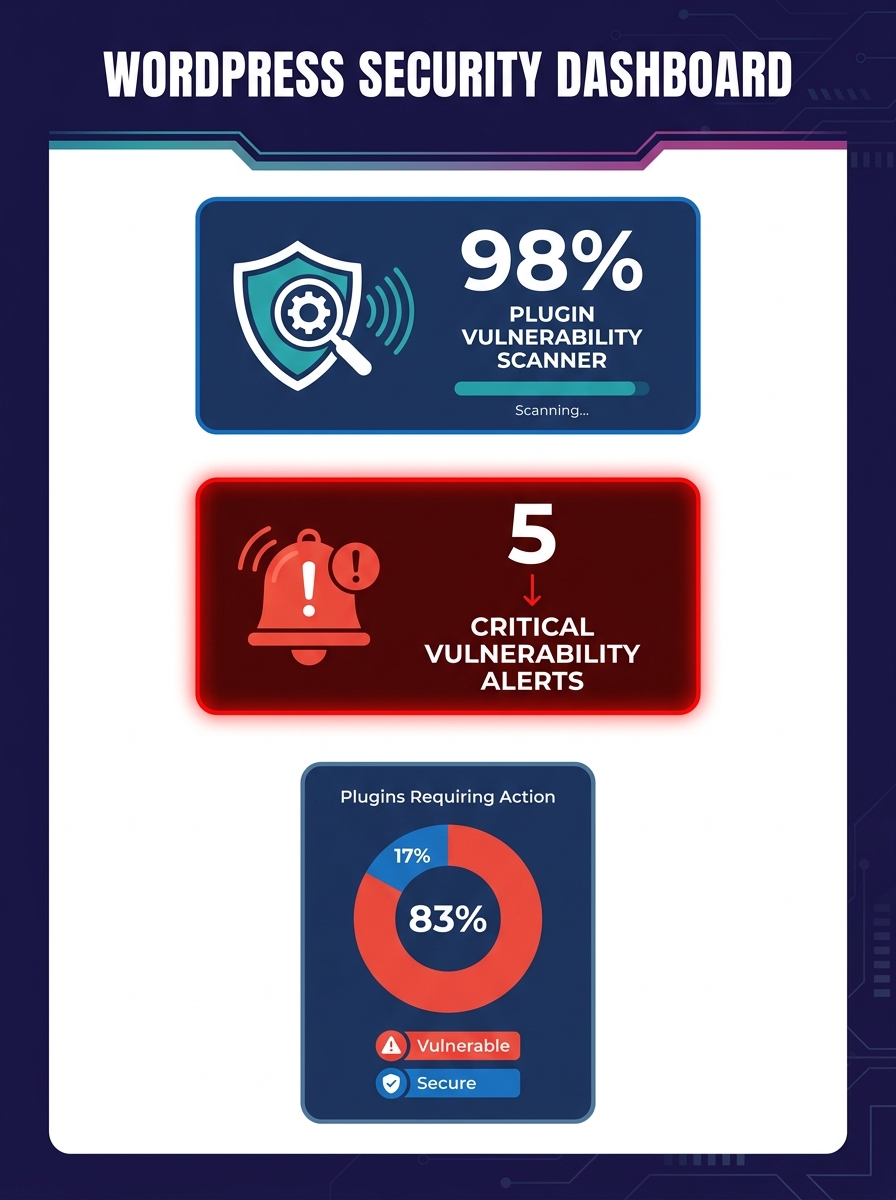
Plugin vulnerabilities now account for the overwhelming majority of successful WordPress compromises, with security firm Patchstack tracking over 5,000 new vulnerabilities in WordPress plugins and themes during 2023, according to analysis published by Blog Herald on April 26.
The figures underscore a widening gap between WordPress core security — which has hardened significantly over the past decade — and the sprawling plugin ecosystem that surrounds it. Sucuri's 2023 Hacked Website Report found outdated or vulnerable plugins responsible for the dominant share of successful attacks on WordPress installations, Blog Herald reported.
The WordPress plugin directory now hosts over 59,000 plugins, many maintained by single developers working without financial incentive to provide indefinite security support. Some plugins are abandoned entirely, continuing to accumulate known exploits long after their developers have moved on.
The Compression of Exploit Windows
The window between public vulnerability disclosure and active exploitation has compressed dramatically over the past five years, the report notes. When a high-severity vulnerability is disclosed in a popular plugin, exploit code can appear within hours. Automated scanners run continuously, identifying unpatched installations across the web.
This dynamic mirrors a pattern identified in 2009, when a hacker published a list of blogs still running vulnerable WordPress versions after a major patch release and began working through it systematically. The lesson remains unchanged: delayed upgrades don't just leave sites exposed — they advertise that exposure to attackers running automated discovery tools.
The economics behind this vulnerability accumulation are straightforward, according to the analysis. Free plugins represent acts of generosity rather than service contracts. Plugin developers often lack financial incentive to maintain their work indefinitely, creating a growing population of unmaintained code running on production sites.
Core Security vs. Ecosystem Risk
WordPress core software has become significantly more hardened since 2009, Blog Herald reported. The WordPress Security Team now includes dozens of contributors, runs a dedicated bug bounty program, and coordinates disclosures through a formal process. Automatic updates for minor releases, introduced in WordPress 3.7, mean most sites receive security patches without owner intervention.
But core vulnerabilities represent a handful of disclosures annually, compared to thousands in the surrounding plugin and theme ecosystem. This creates a disconnect between WordPress's reputation for security issues and where the actual attack surface lives. Agencies managing WordPress plugin supply chain risks face a materially different threat model than the platform's public perception suggests.
The report notes that platforms disclosing less information about their vulnerabilities often appear safer by comparison, despite similar or worse security records. WordPress's public vulnerability disclosure process and visible patch notes create transparency that competitors lacking formal disclosure programs don't provide.
Update Automation and Compromise Costs
The case for automatic updates — not just for core but for plugins and themes where the option exists — centers on what a compromised site actually costs, according to the analysis. Lost traffic, blacklisting by Google's Safe Browsing, data exposure, and cleanup hours can undo months of SEO work overnight.
Google continues to drop sites from search results when it detects spammy links injected by attackers, the same dynamic noted in 2009. A successful compromise can eliminate a site's organic visibility within hours of detection.
The objection that automatic updates might break functionality needs weighing against this risk profile. Sites running outdated plugins advertise their vulnerability status to automated scanners that identify unpatched installations faster than manual review cycles can respond.
Agencies building automated compliance and risk controls into client infrastructure report that plugin update automation reduces emergency support calls while addressing the compressed exploitation window that manual update processes cannot match.
What This Means for Agency Owners
Agency leaders managing client WordPress installations face a structural security problem that manual processes cannot solve at scale. The 5,000+ annual plugin vulnerabilities tracked by Patchstack represent a threat surface that grows faster than ticket-based update workflows can address, particularly when agencies manage dozens or hundreds of client sites.
The compression of exploit windows — from public disclosure to active exploitation measured in hours rather than days — makes automatic update systems a reliability issue rather than a convenience feature. Clients whose sites get compromised due to outdated plugins don't distinguish between "we were planning to update that next week" and negligence. Google's Safe Browsing doesn't either.
For agencies offering white-label WordPress services, plugin security protocols belong in service agreements as explicit deliverables, not assumed maintenance tasks. Clients need to understand that the third-party plugin they insisted on installing in 2022 may represent their primary security exposure in 2026, regardless of how well the core WordPress installation is configured. The WordPress plugin supply chain requires active vetting and ongoing monitoring — work that agencies can either build into their service model or watch become an emergency response cost later.