

Cheap labor gets blamed every time an offshore SEO engagement falls apart, and every time, the real failure happened before the first task was assigned. Agencies with strong domestic SEO workflows assume those same workflows will translate overseas. They won't. The talent in the Philippines, India, and Eastern Europe is genuinely capable. Specialists there run technical audits, manage link acquisition campaigns across dozens of client accounts, and produce content that ranks. The breakdown isn't a people problem. It's a systems problem, and the specific system that's missing is almost always documentation.
This article defends a straightforward claim: documented processes, not talent selection, determine whether your offshore SEO team produces work you'd put your agency's name on. Three pieces of evidence make the case.
SOPs Do the Work That Proximity Used to Do
When your SEO team sits in the same office, quality control happens informally. Someone glances at a draft over a colleague's shoulder. A quick hallway conversation catches a keyword stuffing problem before it ships. You don't notice how much of your quality assurance depends on physical closeness until that closeness disappears.
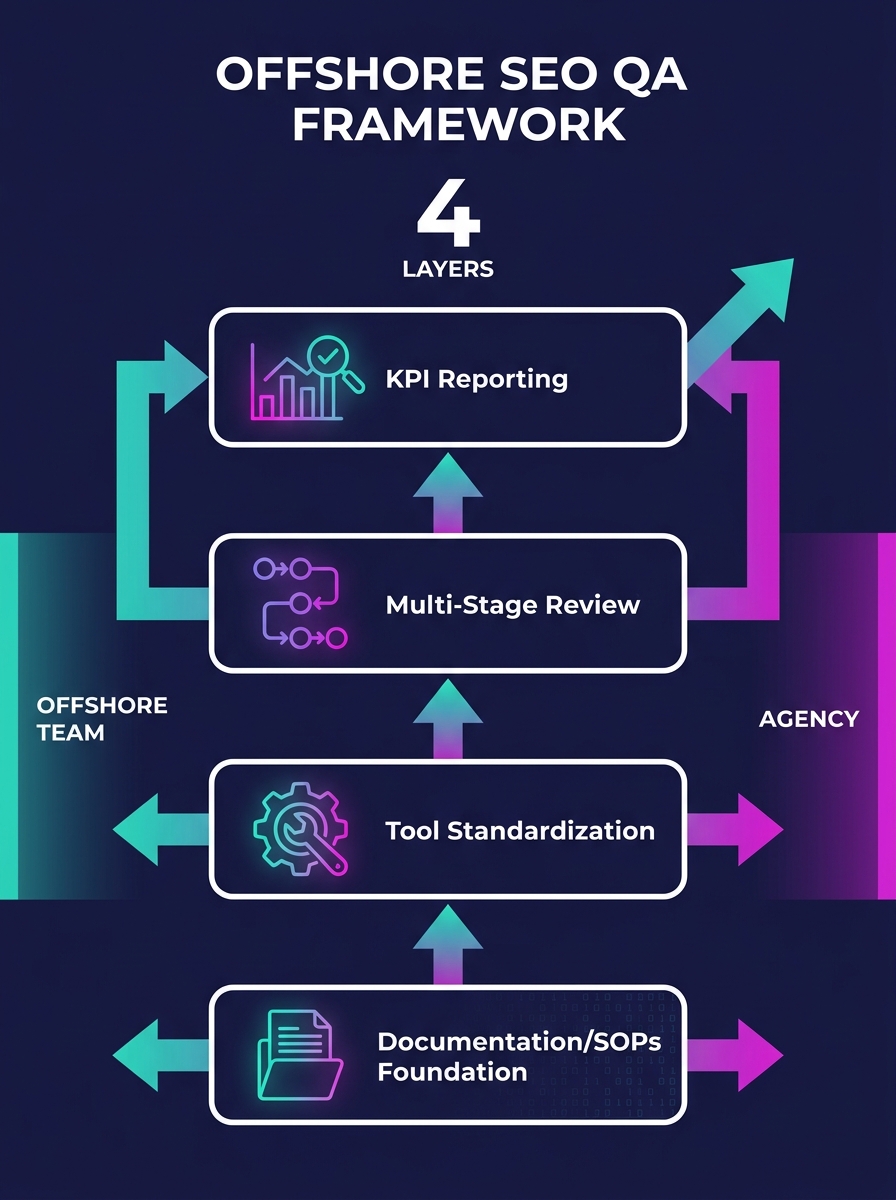
Offshore teams don't have hallways. They have Slack channels, shared drives, and whatever documentation you gave them on day one. If that documentation is a loose brief and a verbal walkthrough on a Zoom call, your output will drift within two weeks. This pattern is consistent enough that industry analysis of onshore vs. offshore workflows has identified it explicitly: affordable offshore SEO maintains quality through documented processes, not informal oversight.
What does adequate documentation actually look like for an SEO team? It's more granular than you'd expect:
- Content SOPs that specify target word count ranges, heading structure, internal linking minimums, tone-of-voice guidelines per client, and the exact tools used for keyword research (Ahrefs, SEMrush, or whatever your agency standardizes on)
- Technical audit checklists that walk through Screaming Frog crawl interpretation, Core Web Vitals benchmarks, schema markup validation, and how to log findings in your project management tool
- Link outreach playbooks covering prospecting criteria, email templates with personalization requirements, follow-up cadences, and the minimum Domain Authority threshold for placements
- Reporting templates that define which KPIs appear in client-facing dashboards, how data is pulled from Google Search Console and GA4, and what narrative structure accompanies the numbers
Each of these documents takes a few hours to create. Agencies that skip this step spend far more time on revisions, rework, and client-facing damage control down the line. If your agency already has outsourcing processes that work domestically, translating those into offshore-ready SOPs is a natural extension.
Trial Projects Expose What Portfolios and Interviews Cannot
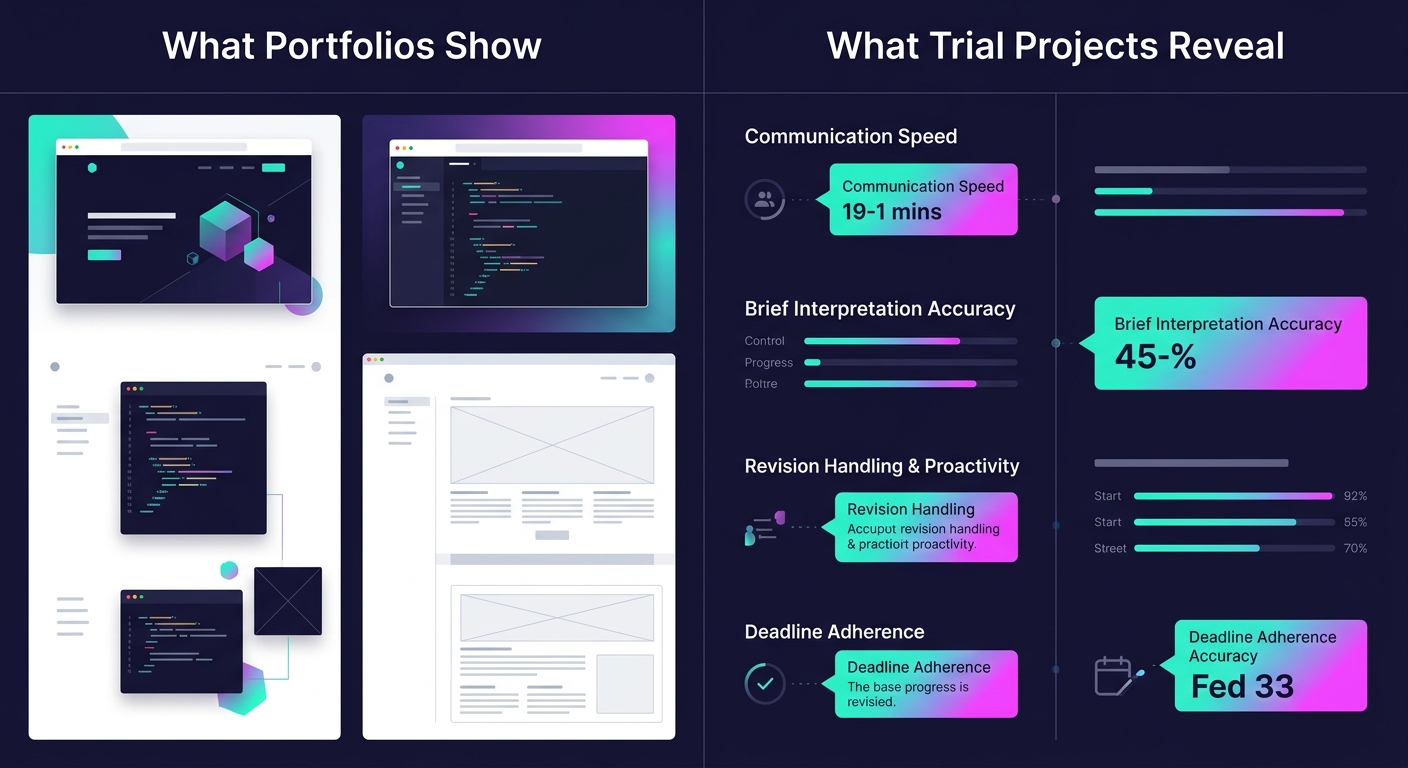
Portfolios lie. Not intentionally, but a portfolio shows an offshore provider's best work under ideal conditions. It tells you nothing about how they handle ambiguous briefs, tight deadlines, or the fifteenth WooCommerce product page description in a batch of fifty.
The better evaluation method is a paid trial project with clearly defined deliverables and a short timeline. FATJOE's outsourcing guide recommends placing a trial order to evaluate responsiveness and work quality before committing to a long-term arrangement, and this advice holds up well in practice.
A good trial project for an offshore SEO team might look like this:
- Commission a technical audit of a staging site you control, with a 5-business-day turnaround
- Request 3-5 blog posts targeting specific long-tail keywords, complete with meta descriptions and internal link suggestions
- Ask for a 30-day link-building sprint targeting a niche you already understand well enough to evaluate the placements
Score each trial against the SOPs you created in step one. Did the team follow the checklist? Did they ask clarifying questions when the brief was intentionally vague? Did the content match your tone-of-voice guide, or did it read like it was written for a different brand entirely?
Agencies working with an established SEO company in the Philippines or a team in Eastern Europe should expect trial projects to surface communication patterns, too. You'll see how the team handles feedback, whether they push back on unreasonable requests (a good sign), and how long it takes them to internalize your standards.
Tip: Run trials with 2-3 different providers simultaneously. Use identical briefs so you're comparing apples to apples. The quality gap between providers becomes obvious fast when the input is controlled.
Communication Structure Matters More Than Communication Frequency
The instinct when managing an offshore team is to increase meeting frequency. Daily standups. Twice-weekly check-ins. Friday retrospectives. Agencies pile on calls thinking more communication equals tighter quality control. It doesn't. More calls with unclear agendas just eat into the hours you're paying for.
What works is structured communication with defined purposes for each touchpoint. Search Engine Land's guidance on SEO-content collaboration recommends setting up regular meetings alongside asynchronous update channels, and that two-track approach translates directly to offshore management.
Here's a communication cadence that agencies running offshore SEO teams at scale tend to converge on:
- Weekly sync (30 minutes max): Review deliverable status, flag blockers, align on priorities for the coming week. Screen-share dashboards so everyone's reading the same numbers.
- Async daily updates in Slack or Teams: Each team member posts what they completed, what's next, and any questions. No call needed. These updates create a searchable log that's far more useful than meeting notes.
- Bi-weekly or monthly strategy review (45-60 minutes): Zoom out from task execution. Discuss keyword trends, content gaps, algorithm updates, and client feedback. This is where you calibrate direction.
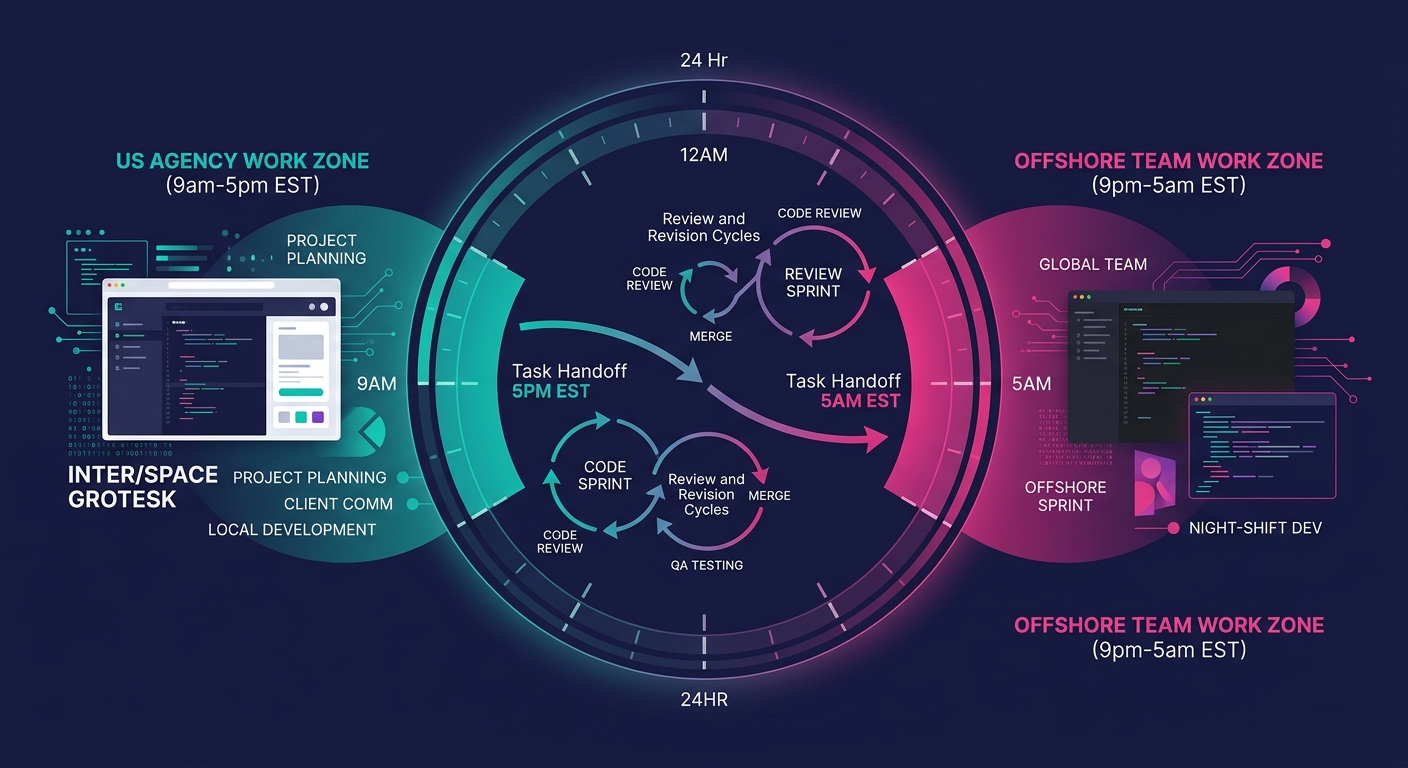
Time zone differences actually help execution speed when communication is structured this way. An offshore team in Southeast Asia that wraps their workday as your US-based agency is starting theirs can hand off completed audits and content drafts overnight. You review in the morning. They revise during their next cycle. A task that would take three calendar days with a co-located team compresses into two.
Quality control in offshore SEO is a systems design problem, not a hiring problem.
The agencies that get this wrong tend to be the ones whose outsourcing models already show cracks at scale. If your internal systems can't handle eight concurrent client projects with a domestic team, adding offshore complexity will accelerate the breakdown, not solve it.
And if you're running WordPress-heavy client work alongside SEO, the documentation habit pays double dividends. The same SOP discipline that keeps offshore SEO quality consistent will improve how your dev team handles white-label WordPress builds and client handoffs. You can see how this kind of systematic approach plays out across our website portfolio, where consistent delivery standards hold regardless of which team members executed the work.
The Claim, Tested Against Reality
The argument here is narrow on purpose. Documentation and process design solve the quality problem in offshore SEO. But there's an obvious objection: what about truly bad hires? What about an offshore specialist who fabricates backlink reports or plagiarizes content?
Those scenarios happen. And documentation helps catch them faster than intuition does. When you have a checklist that requires Ahrefs verification of every placed link, a fabricated report gets flagged in the first review cycle. When your content SOP requires Copyscape scans before submission, plagiarism doesn't survive to the client-facing stage. Defined KPIs like 25% traffic growth targets, 10 quality backlinks per month, or specific keyword ranking improvements give you concrete grounds for evaluation rather than a vague sense that "something feels off."
The conventional wisdom says offshore SEO is risky. That wisdom is correct, but it misidentifies the source of risk. The risk isn't geographic. It's procedural. An undocumented domestic team produces inconsistent work too; you just catch the problems faster because you're standing in the same room.
Build the documentation first. Run the trials second. Structure the communication third. The talent will follow the system you create for it, and your clients will never know the difference.