

White-label developer onboarding fails when agencies treat it like a file dump. Structured onboarding improves contractor retention by 82% and lifts productivity by over 70%, according to cross-industry workforce data. The gap between agencies that keep developers and agencies that churn through them almost always traces back to the first fourteen days.
The Fourteen-Day Window Where Agencies Lose Contractors
Every agency developer playbook lives or dies inside a narrow window. The first two weeks of a contractor relationship set the pattern for everything that follows: communication rhythms, code quality, scope understanding, and the contractor's willingness to flag problems early instead of hiding them. Agencies that skip this window pay for it in revision cycles, missed deadlines, and the slow erosion of client trust. One analysis from Geeks for Growth describes this pattern clearly: "the fastest way to create rework, delays, and the uncomfortable feeling that you're project-managing your vendor instead of running your agency" is letting work begin before ownership and inputs are defined.
The numbers back this up. Organizations with structured onboarding see 2.5 times more revenue growth from their white-label partnerships than those without one. Companies that use formal onboarding frameworks report 33% savings in labor costs and a 25% expansion in active client communication hours within three months. These aren't vague improvements. They show up in margin reports and client retention rates. Yet most white-label team onboarding still consists of a Slack invite, a shared Google Drive folder, and a vague instruction to "follow the existing patterns in the codebase."
The problem gets worse at scale. When you manage 3 contractors, informal onboarding feels fine. At 8 or 12, it collapses. Each new developer interprets your standards differently. One uses ACF for custom fields; another writes raw meta queries. One follows your Git branch naming; another invents their own. The drift compounds across client sites until you're spending more time on quality control than on billable work. We wrote about this compounding effect in our breakdown of how technical debt multiplies across client portfolios, and the root cause is almost always a weak first two weeks.
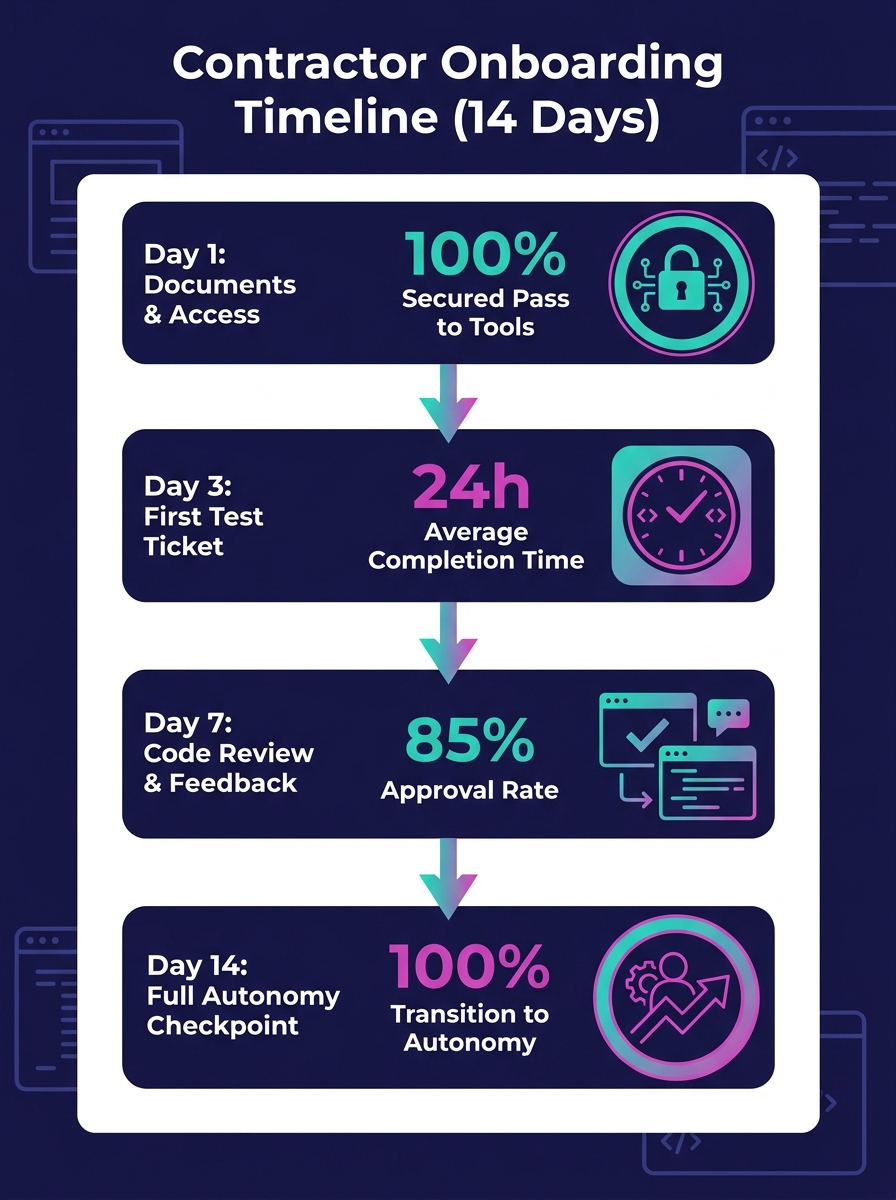
What Contractor Readiness for WordPress Actually Requires
Contractor readiness for WordPress is a specific, testable condition. It means a developer can pick up a ticket from your queue, build it to your standards, push it through your review process, and deliver it to the client without you rewriting their work. Getting a contractor to that point requires three things: environment parity, standard documentation, and a graded ramp-up of ticket complexity.
Environment parity comes first. If your contractor's local setup doesn't match your staging and production servers, you'll get code that works on their machine and breaks on yours. WordPress 7.0, which shipped in May 2026 with PHP 7.4 as the new minimum, makes this even more critical. A contractor running PHP 8.2 locally while your legacy client sites still run 7.4 will write code that throws deprecation notices or silent errors in production. Your onboarding checklist needs to specify PHP version, MySQL version, WordPress version, and every required plugin with its exact version number. Specialized white-label teams that formalize this step complete full technical integration in 3 to 7 days. Teams that skip it spend 3 to 7 weeks chasing environment bugs instead.
Standard documentation means a living reference that answers the 20 questions every new contractor asks in their first week. Which page builder does this client use? Where do I find staging credentials? What's the Git workflow? How do I handle WooCommerce template overrides? The White Label Agency's onboarding guide recommends that agencies walk new contractors through a structured series of steps rather than relying on tribal knowledge passed through Slack threads. A single Notion doc or Confluence page with your coding standards, naming conventions, deployment process, and escalation path replaces dozens of back-and-forth messages. We've seen agencies cut revision cycles by 60% with this kind of structured scope documentation.
The graded ramp-up is where most agencies get lazy. They hand a new contractor a complex WooCommerce customization on day one because the deadline is tight. The contractor, unfamiliar with your conventions, makes reasonable but wrong choices. You spend two hours fixing their work. They feel micromanaged. You feel frustrated. A better approach: start every new contractor with a small, well-defined ticket (a CSS fix, a plugin configuration, a content migration) that lets you evaluate their communication style, code quality, and turnaround time with minimal risk. Then increase complexity over the first 5 to 7 tickets.
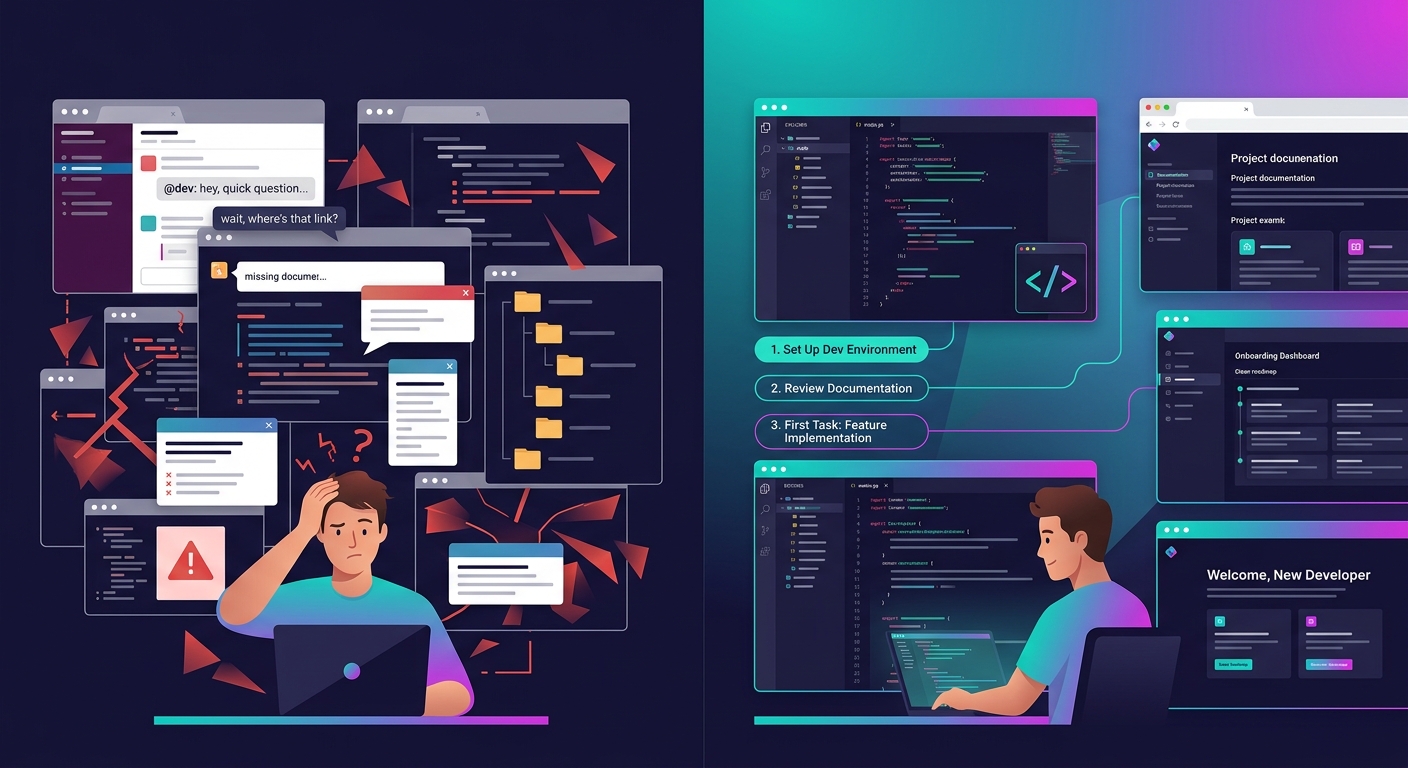
WordPress Contractor Management Beyond the First Delivery
The onboarding period ends. The management period doesn't. WordPress contractor management is an ongoing discipline that requires feedback loops, security protocols, and regular alignment checks. Agencies that treat the first successful ticket as proof of permanent readiness are setting themselves up for drift.
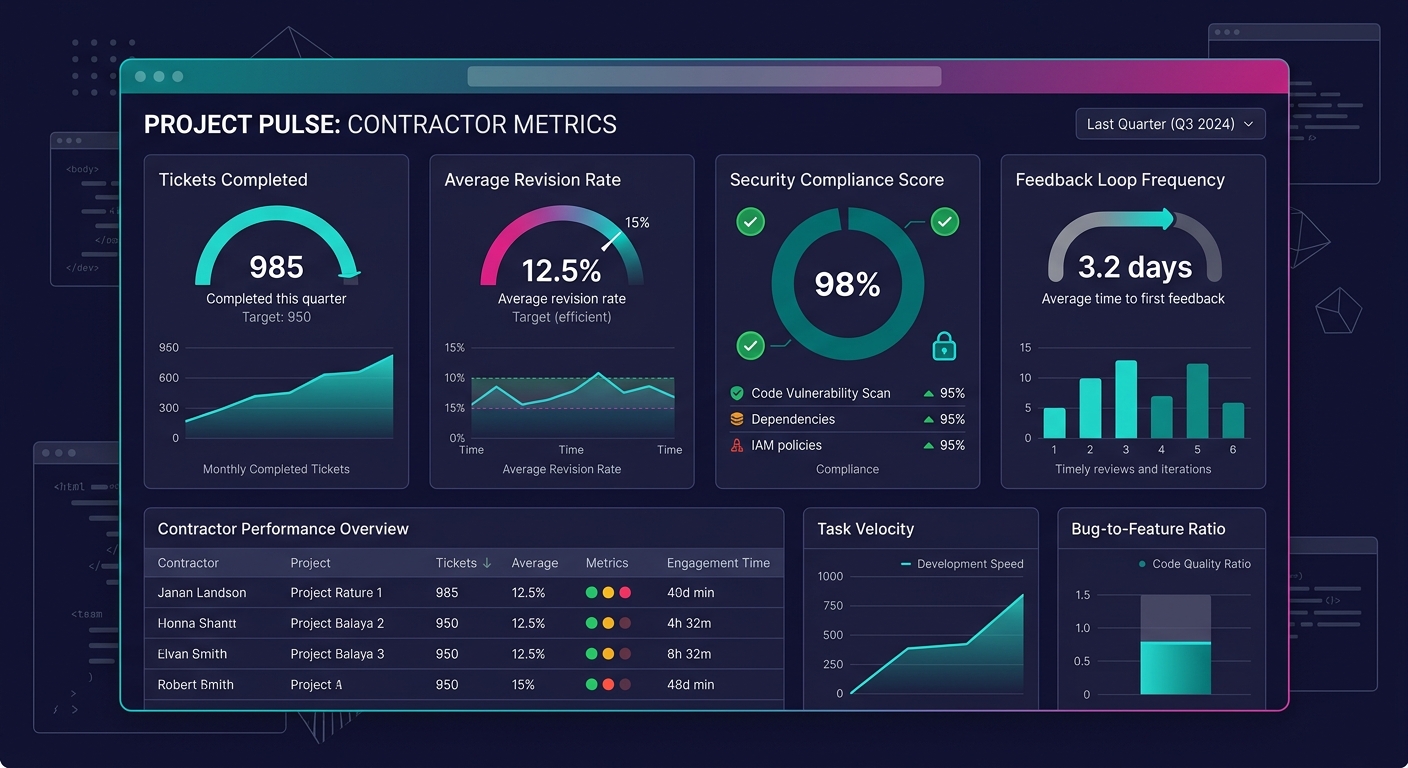
Security is the most urgent ongoing concern. Every contractor with access to your client sites is a potential attack surface. The baseline is clear: use least-privilege access so contractors only reach the sites and tools they need. Require multi-factor authentication on every WordPress admin login and every hosting panel. Store credentials in a password manager with shared vaults, not in pinned Slack messages. Given that WordPress plugins account for 96% of discovered security flaws, your contractors need to understand your security baseline for every client deployment. A contractor who installs an unvetted plugin on a client site because it solved a similar problem on a personal project can expose you to the kind of vulnerabilities that create rogue admin accounts.
Feedback is the retention lever that costs nothing and pays back everything. Research on contractor retention shows that collecting feedback after the first project improves both the process and the relationship. Run a 15-minute retrospective after the contractor's third and tenth tickets. Ask what was unclear, what took longer than expected, and what tools or documentation would help. Agencies that run exit interviews and engagement surveys, even informal ones, learn what makes contractors stay or leave. The investment is small. The data is worth more than any recruiter fee.
Treating developers as partners rather than vendors changes the dynamic entirely. We've argued before that agencies should be building partner-class relationships with their white-label developers, and the onboarding period is where that relationship either takes root or withers. A contractor who feels like a disposable resource will act like one: doing the minimum, avoiding hard conversations, and disappearing when a better-paying gig shows up. A contractor who feels trusted, informed, and included in the feedback loop will flag scope creep before it becomes a budget problem, suggest better approaches before you ask, and stick around long enough to learn your clients' quirks.
Where the Playbook Still Falls Short
This agency developer playbook addresses the structural failures that cause most contractor relationships to collapse in the first month. It doesn't solve everything. The hardest problems in white-label team onboarding are the ones that resist documentation: timezone misalignment that turns a 2-hour feedback loop into a 24-hour one, cultural differences in how contractors interpret "urgent" versus "important," and the fundamental tension between wanting contractors to follow your process exactly while also wanting them to think independently when your process has gaps.
There's also a scale problem that no checklist resolves. At some point, the agency lead who personally onboards every contractor becomes the bottleneck. The onboarding process itself needs to be delegable, which means it needs to work without the person who designed it in the room. Recorded walkthroughs, self-serve documentation, and automated environment setup scripts help, but they introduce their own maintenance burden. The documentation rots if nobody updates it. The scripts break when you upgrade your hosting stack. The walkthroughs reference plugins you stopped using six months ago.
And the broader market context matters here, too. With over 123,000 tech layoffs recorded in 2026 so far, the contractor talent pool is deeper than it's been in years. That means agencies have more options, but it also means contractors have more options. The agencies that invest in genuine contractor readiness for WordPress, with real documentation, real feedback, and real respect for the contractor's time, will attract and keep the best people from that pool. The agencies that don't will cycle through contractors every 60 to 90 days, losing institutional knowledge each time and wondering why their margins keep shrinking. The playbook matters. The follow-through matters more, and whether you can sustain both over 12 months of client work is a question each agency has to answer with its own operations, not with a blog post.