

Most businesses underestimate how much their visuals are doing (or failing) to do for them. Once you understand the full range of graphic design types available, it becomes a lot easier to close the gaps that are quietly costing you conversions, credibility, and growth.
Key Takeaways
- The types of graphic design span far more than just logos — from social media creatives and ad banners to web assets and print collateral, each type serves a specific business function.
- Consistent, professional visuals across all touchpoints directly impact brand trust, audience engagement, and conversion rates.
- Working with a single reliable design partner means faster turnaround, brand consistency, and significantly less management overhead for your team.
There's a reason design-driven companies consistently outperform their competitors. According to G2's research on graphic design, around 93% of people agree that an object's visual dimensions influence their purchasing decisions. Meanwhile, 46% of people judge a business's credibility based on its website design alone.
That's not a small margin. That's almost half of every potential customer forming a snap judgment before reading a single word of your copy.
Great design isn't just about looking polished. It communicates trust, guides attention, and handles a significant portion of your sales and marketing work without you having to lift a finger.
The challenge most growing businesses run into is assuming they need to hire multiple separate specialists — one for branding, another for social content, and so on.
That gets expensive and complicated fast. Working with a single experienced design partner who covers multiple graphic design types is almost always the smarter, more scalable move.
8 Fundamental Types of Graphic Design
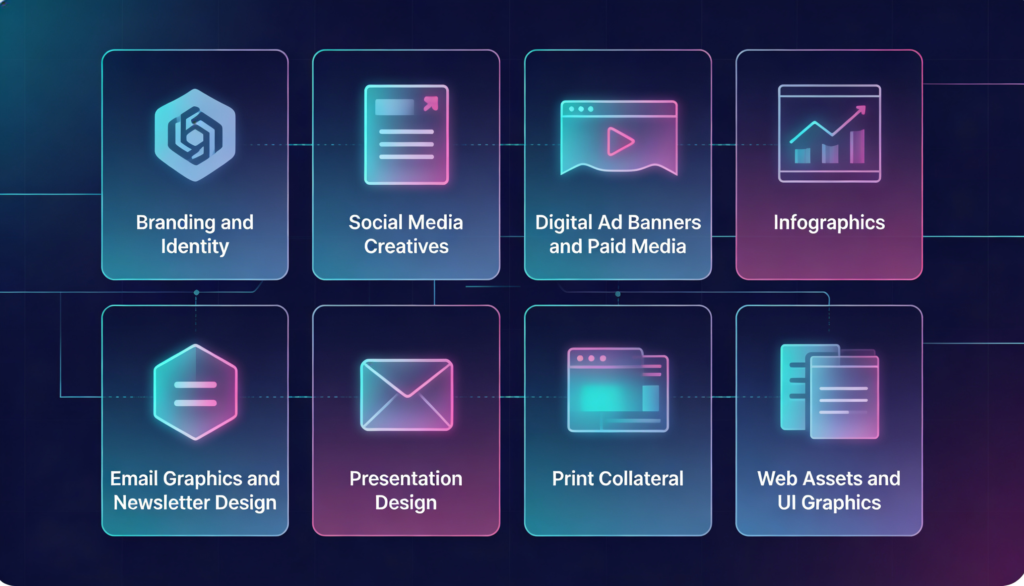
So, what are the types of graphic design services your business should actually know about? Let's break them down.
Branding and Identity
This is the foundation on which everything else is built. Branding and identity design cover your logo, color palette, typography, brand guidelines, and the visual language your business uses to communicate who you are. It's what makes your business recognizable across every single customer touchpoint.
Done well, a strong brand identity creates instant familiarity. Done poorly or skipped entirely? It creates confusion and signals to potential customers that you might not be a serious player.
A branding project typically includes a primary logo and its variations, secondary marks, a defined color system, font pairings, iconography, and a brand style guide that ensures consistency across all materials going forward. For businesses rebuilding or launching, the design process should always begin here. Getting this right from the start matters more than most people realize.
Social Media Creatives
Social media content is one of the highest-volume, most fast-moving design needs a business has. Posts, stories, reels covers, carousels, highlight icons, profile banners — the list of formats across Instagram, Facebook, LinkedIn, TikTok, and X is extensive. And each platform has its own dimensions, visual conventions, and audience expectations.
Social media creatives need to be on-brand while also being built for the feed environment, where attention is scarce and the first 1-2 seconds determine whether someone stops or keeps scrolling. That means strong visual hierarchy, bold typography, and images or graphics that communicate a message almost instantly.
For businesses running regular campaigns, promotions, or ongoing content calendars, this is one of the most consistent graphic design needs they'll have. The demand is ongoing, which means you need a reliable design process behind it — not a patchwork of freelancers scrambling to hit deadlines.
Digital Ad Banners and Paid Media
Paid advertising, such as Google Display, Meta ads, programmatic banners, and LinkedIn sponsored content, relies heavily on visual design to generate clicks. Ad creatives need to be engineered for conversion, not just aesthetics. That means clear messaging, a compelling visual hook, and a call to action that's hard to miss.
Digital ad design involves producing assets across multiple sizes and specifications simultaneously. A single campaign might require 10 to 20 size variations of the same creative to run across different placements. This is technical design work that requires both creative skill and a solid understanding of ad platform requirements.
Infographics
Infographics take complex information, such as data, processes, comparisons, timelines, statistics, and transform it into something visual that's far easier to absorb and share. They're one of the most effective content formats for B2B audiences in particular.
A well-executed infographic can serve multiple purposes at once: it works as a standalone piece of content on your website, it's shareable on social media, it can anchor a blog post, and it can be repurposed into a slide deck or sales document. The design work here requires a clear understanding of information hierarchy and data visualization.
It’s not just making something look nice; it’s making something genuinely useful.
Email Graphics and Newsletter Design
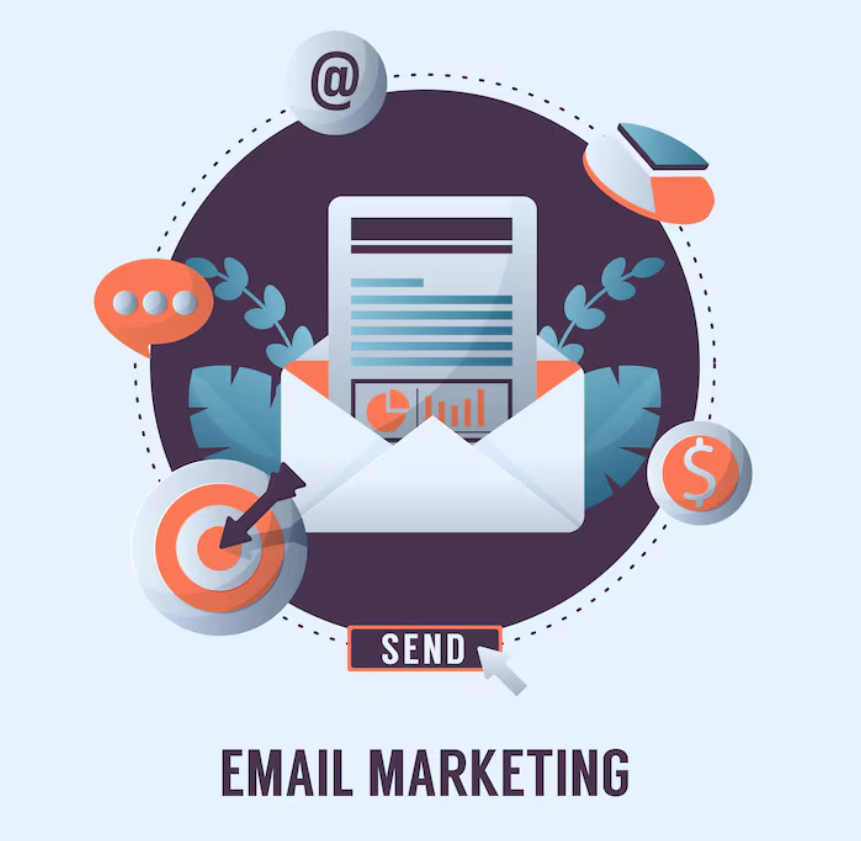
Email marketing remains one of the highest-ROI channels for businesses that use it well, but most underinvest in its visual side.
Email graphics include branded headers, promotional banners, product imagery layouts, call-to-action buttons, footer designs, and full newsletter templates that can be reused across campaigns.
A well-designed email template serves two purposes: it builds brand familiarity every time someone opens their inbox, and it structures content to guide the reader naturally toward the action you want them to take. Visually branded emails consistently outperform unbranded ones for engagement and click-throughs.
This is one of those types of graphic design that often gets deprioritized because it's less visible than social or web design — but if you're sending emails to a list of any meaningful size, the design of those emails is directly tied to your revenue.
Presentation Design
This includes pitch decks, sales presentations, internal reports, investor decks, and webinar slide sets. A well-designed presentation makes your argument more persuasive, your data easier to digest, and your brand more credible to the people in the room.
This type of graphic design work involves creating custom slide templates, visualizing data through charts and graphics, and bringing a clear visual narrative to what might otherwise be a wall of bullet points and generic stock imagery.
Print Collateral
Print design covers business cards, brochures, flyers, banners, signage, packaging, menus, and any other physical marketing material your business uses. Even in a predominantly digital environment, print remains relevant — especially for local businesses, event-driven marketing, trade shows, and industries where a physical leave-behind still carries weight.
What distinguishes strong print design from average work is an understanding of how design translates from screen to print: color profiles, bleed and trim specifications, resolution requirements, and material considerations all affect how the final piece looks in the real world.
Web Assets and UI Graphics
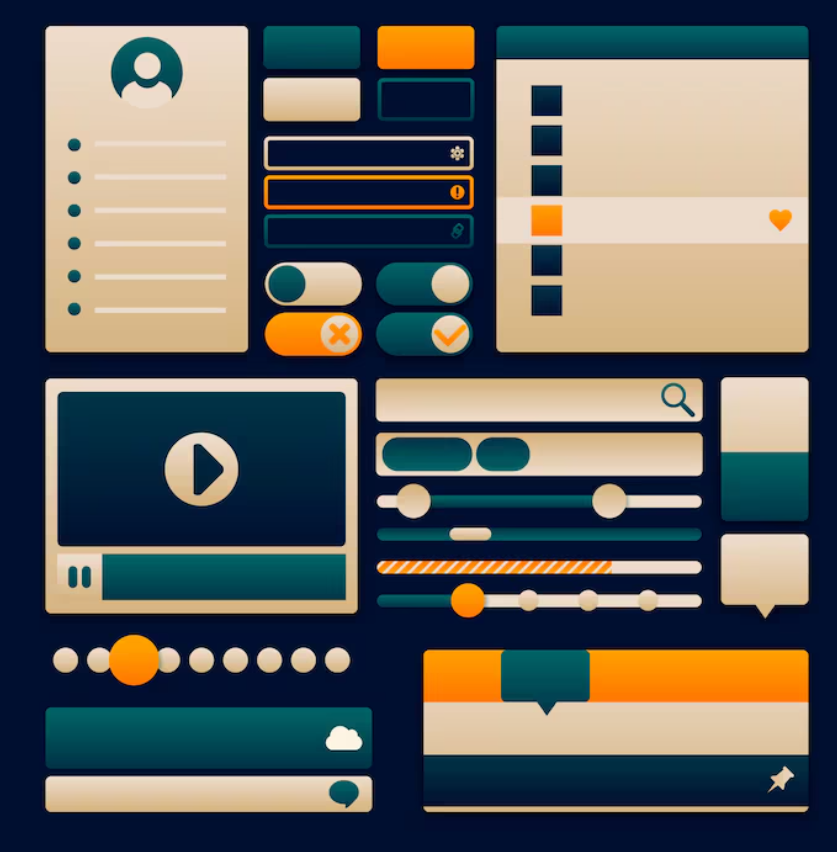
This graphic design type covers all the visual elements that appear on your website or digital product, including hero images, icon sets, custom illustrations, CTA buttons, banners, section backgrounds, blog post graphics, feature imagery, and UI components such as cards, badges, and modals.
Web graphics need to balance visual quality with performance. Large, unoptimized images tank load times, which affects both user experience and SEO rankings. Good web asset design is about creating visuals that are appropriately formatted, sized, and structured for the web environment they'll live in.
For businesses on WordPress or Shopify, having a consistent library of web assets that align with your brand identity is what separates a site that feels cohesive and professional from one that looks like it was assembled from stock templates. Web assets are the visual glue that holds a site together.
Create Engaging and Eye-Catching Graphics With Webmastered
Graphic design spans a wide range of disciplines, and as you can see, each one serves a distinct purpose in your overall business presence. From brand identity that anchors everything you do to web assets that make your site look and perform at its best, every category matters, and all of them work better when they’re built from the same visual foundation.
What most businesses eventually realize is that managing multiple design vendors across these categories creates unnecessary friction. Brand consistency suffers, timelines slip, and communication overhead eats up time your team doesn't have.
The better approach is to hire experienced graphic designers through a partner who can handle multiple design needs under one roof. Someone with the skill, the creative range, and the operational reliability to produce graphics you can actually count on.
That's exactly what Webmastered brings to the table. As a white-label agency built around reliable delivery and clear communication, Webmastered supports digital marketing and web development agencies with a wide range of graphic design types.
If your clients need design support for their web projects, or if you're a business owner looking to level up your visual presence without the overhead of building an in-house team, contact us today. Let’s talk about what’s possible!
Frequently Asked Questions
- How long does a typical graphic design project take?
Timelines vary significantly depending on the scope and complexity of the work. A single social media graphic might be turned around in a day or two, while a full brand identity project — including logo design, brand guidelines, and supporting assets — could take two to four weeks.
Working with a structured design partner generally means more predictable timelines and clearer communication throughout the process.
- What's the difference between a graphic designer and a web designer?
Graphic designers focus on visual communication across a range of formats — both digital and print. Web designers specialize in the visual and user experience aspects of websites and digital interfaces specifically.
In practice, there's significant overlap, especially for businesses that need web graphics, UI elements, and on-site imagery.
- Do I need separate designers for print and digital work?
Not necessarily, but you do need designers who understand the specific requirements of each medium. Print and digital design have different technical requirements around color profiles, resolution, file formats, and sizing. A designer experienced in both can handle the full range of your needs.